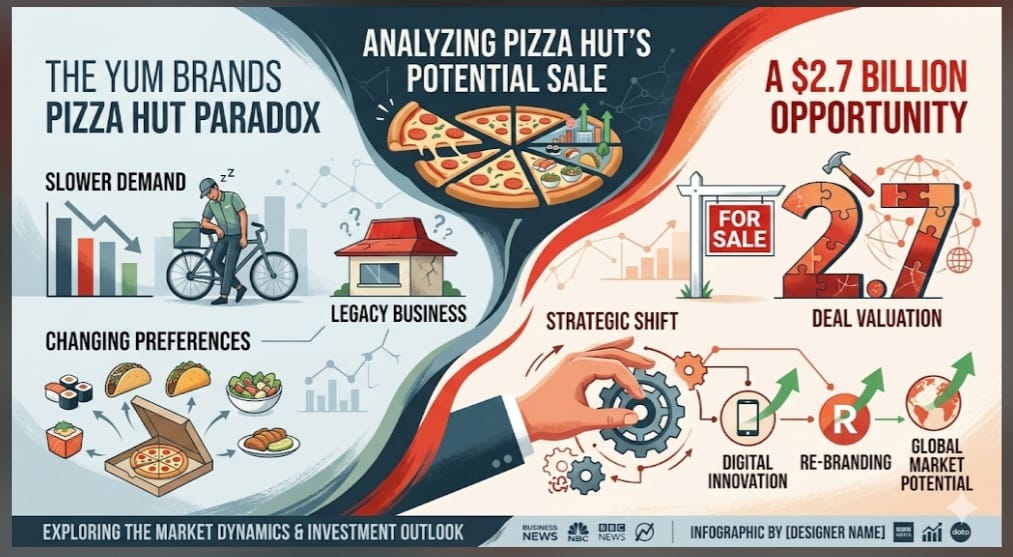
Yum Brands is reportedly moving to divest Pizza Hut for around $2.7 billion, marking one of the most significant strategic shifts in the quick-service restaurant (QSR) sector in recent years. A Global Fast-Food Giant Reassesses Its Portfolio The move comes as Pizza Hut faces pressure from changing dining habits, increased competition in food delivery, and consumer spending slowdowns across key markets. While the brand remains one of the world's largest pizza chains, growth has become harder to sustain in an increasingly crowded and discount-driven category. For the broader industry, the development highlights how even established global brands are being forced to rethink ownership structures and growth models. What This Signals for Marketers The reported sale is less about Pizza Hut's brand equity and more about the economics of consumer attention and consumption. Over the past decade, QSR competition has shifted from store footprint to digital convenience. Delivery aggregators, quick commerce platforms and direct-to-consumer channels have fundamentally altered how consumers discover and purchase food. For marketers, this means brand heritage alone is no longer enough. Customer acquisition costs are rising, loyalty is fragmenting and promotional intensity continues to increase. Indian QSR brands face similar pressures. The Industry Read The Pizza Hut story is a reminder that category leadership does not guarantee future growth. As categories mature, sustainable growth will increasingly depend on operational efficiency, first-party consumer data and differentiated brand positioning rather than scale alone. Our insight In today's consumer economy, distribution advantages can be replicated. What remains difficult to replicate is a brand's ability to stay culturally relevant while adapting to changing consumption behaviour.
Agency News
Yum Brands Explores $2.7 Billion Pizza Hut Sale as Global Demand Pressures Intensify