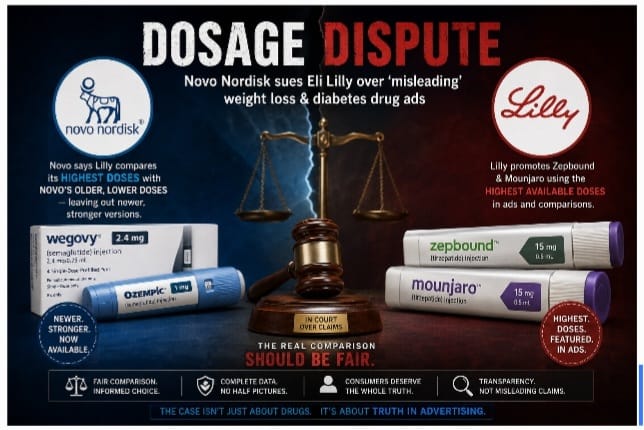
Novo Nordisk has filed a lawsuit against rival Eli Lilly, alleging that the company's advertising for its blockbuster weight-loss and diabetes medicines, Zepbound and Mounjaro, presents an unfair comparison with Novo's Wegovy and Ozempic. According to a Reuters report, the dispute centres on how dosage levels are represented in Lilly's promotional campaigns.
Novo claims Lilly's advertisements compare the highest approved doses of Zepbound and Mounjaro with older, lower doses of Wegovy and Ozempic, while excluding the newer, higher-dose versions of Novo's medicines that are already approved and commercially available. The company argues that the comparison creates a misleading impression of relative effectiveness for consumers evaluating treatment options.
Marketing Claims Under the Microscope
The case highlights the growing importance of comparative advertising in the highly competitive obesity and diabetes treatment market, where blockbuster therapies are competing for physician recommendations, patient adoption and payer support. As demand for GLP-1 medicines continues to surge globally, marketing messages are increasingly becoming as strategically important as clinical data.
For advertisers, the dispute underscores the fine line between persuasive comparison and potentially misleading communication. Regulatory scrutiny of healthcare advertising is expected to intensify as pharmaceutical companies compete for leadership in one of the world's fastest-growing therapeutic categories.
A Legal Battle Over Comparative Advertising
The outcome of the lawsuit could influence how pharmaceutical brands frame efficacy comparisons in future campaigns, particularly when products evolve through new formulations and dosage approvals.
It may also prompt marketers to reassess how clinical evidence is translated into consumer-facing communication without sacrificing accuracy or context.
The Last Word
In healthcare advertising, competitive storytelling can win attention—but incomplete comparisons can quickly turn a marketing advantage into a legal liability.