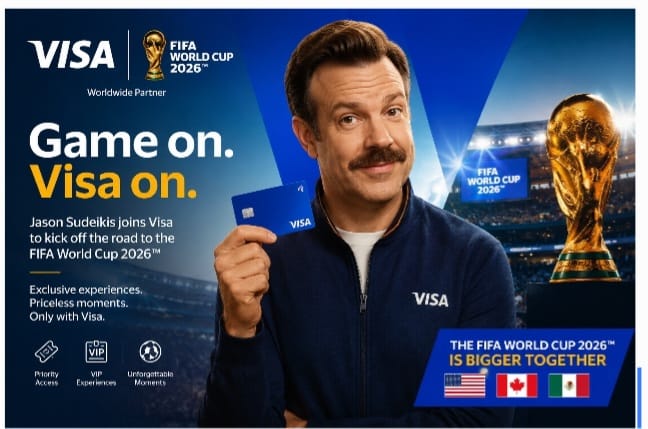
The move signals how global sponsors are increasingly treating mega sports properties less as branding exercises and more as full-stack consumer engagement platforms. With FIFA World Cup 2026 expected to be the largest edition of the tournament — spanning the US, Canada and Mexico with 48 teams — sponsors are preparing earlier, investing heavier and widening the role of entertainment talent in campaign storytelling. Brands focus on engagement with fans Jason Sudeikis joins Visa’s World Cup push as the company leans into humour-led communication and fan-centric rewards. The campaign reportedly blends celebrity creative, commerce integrations and access-based incentives — a model now becoming standard across global sports marketing. How it matters for Indian market Indian brands are entering a similar phase. From the Indian Premier League to ICC tournaments and football leagues, sponsorships are increasingly expected to deliver measurable consumer action — not just awareness.
For marketers in India, the bigger takeaway is the evolution of sponsorship economics. Large sporting partnerships are no longer being evaluated only through visibility metrics like logo presence or television reach. The focus is shifting toward first-party data capture, payments integration, loyalty ecosystems and experiential access. Visa’s approach also reflects another trend Indian agencies are watching closely: entertainment personalities now operate as distribution engines across social, streaming and short-form video ecosystems, often outperforming conventional campaign structures. Our insight
In global sports marketing, access is becoming more valuable than advertising inventory.