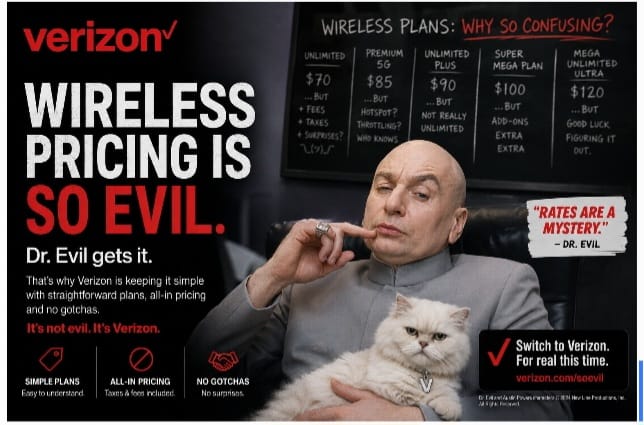
Verizon has launched a new advertising campaign featuring Dr. Evil, the iconic antagonist from the Austin Powers film franchise, to spotlight what it describes as the confusing nature of wireless plan pricing in the US market. A Familiar Character, A Contemporary Marketing Challenge The campaign uses humour and nostalgia to make a straightforward proposition: complicated pricing structures should feel outdated. By positioning complexity as something worthy of parody, Verizon is attempting to simplify a category where consumers are often overwhelmed by discounts, bundles, conditions and promotional fine print. The choice of Dr. Evil is notable. Rather than introducing a new brand character, Verizon is borrowing an established cultural reference with strong recall among millennial audiences who grew up with the franchise. Why This Matters The campaign arrives at a time when telecom brands globally are finding it increasingly difficult to differentiate on network claims alone. Coverage, speed and reliability have become table stakes, pushing marketers to compete through customer experience, transparency and brand perception. For Verizon, the objective appears less about entertainment and more about framing simplicity as a competitive advantage. The Strategic Read For Indian marketers, the campaign is a reminder that nostalgia remains one of advertising's most effective shortcuts to attention—provided it serves a clear business message. The creative works because the character is not the idea; the character is merely the vehicle. As categories become more complex, brands may increasingly use familiar cultural symbols to communicate functional benefits in a way consumers can quickly understand. Our insight The strongest nostalgia campaigns are rarely about the past—they use familiar memories to make a present-day product claim easier to believe.
Global
Verizon Turns to Pop Culture Nostalgia to Reframe a Pricing Message