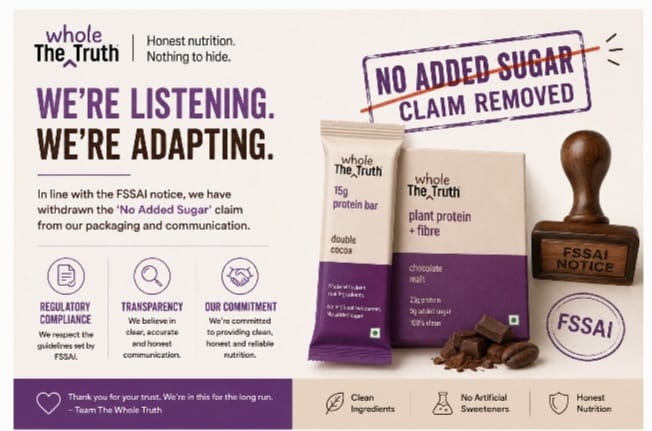
The Whole Truth has dropped its “No Added Sugar” communication across products and marketing materials following regulatory scrutiny from the Food Safety and Standards Authority of India. The development is significant because it places growing attention on how health-focused food brands frame nutritional claims in advertising, packaging and digital commerce environments.
The brand had built much of its positioning around ingredient transparency and clean-label communication — categories that have seen rapid consumer interest among urban, health-conscious buyers. The FSSAI intervention now highlights the tightening scrutiny around interpretation-led marketing language in India’s packaged food sector.
Why This Matters For Advertisers And D2C Brands
The larger implication extends beyond one brand. India’s wellness and nutrition-focused D2C ecosystem has increasingly relied on simplified health messaging to differentiate products in crowded online marketplaces. Claims around sugar, protein, preservatives and “natural” ingredients have become central performance-marketing hooks across social platforms and quick-commerce channels.
For marketers and agencies, the incident reinforces the growing importance of regulatory alignment in brand communication. As health awareness rises, regulators are also becoming more active in monitoring how consumer-friendly terminology may shape perception versus technical nutritional definitions.
The Strategic Read
The next phase of food and wellness advertising in India will likely involve sharper scrutiny of claim-based marketing. Compliance may increasingly become a brand strategy function — not just a legal checkpoint.
Our insight
In categories built on trust and transparency, the cost of oversimplified messaging is rising faster than the reward of attention-grabbing claims.