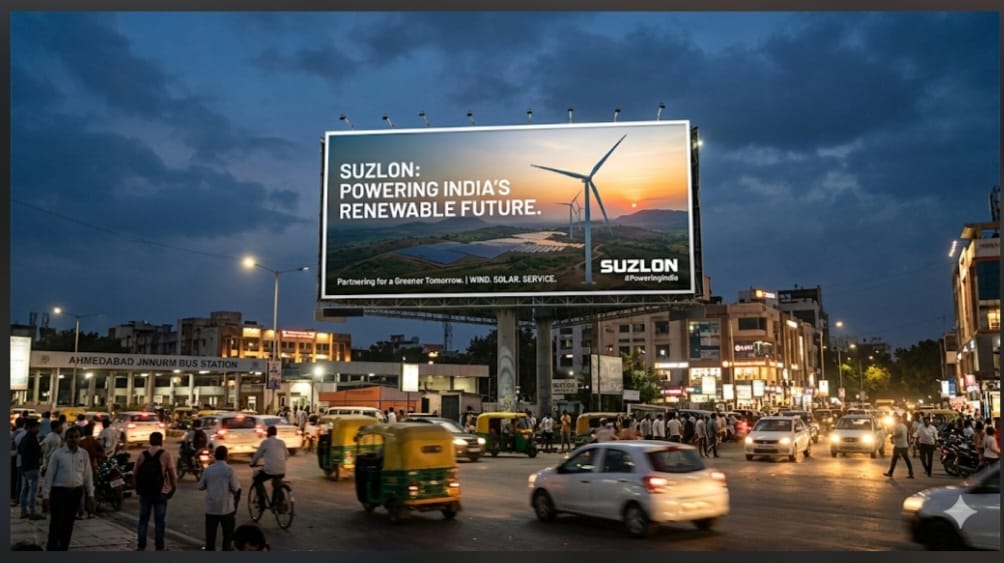
Suzlon, one of India's largest renewable energy companies, is investing in consumer-facing advertising despite generating business primarily through enterprise and institutional clients. The move may appear unusual for a company whose customers are utilities, corporations and project developers rather than households. B2B company enters the consumer conversation However, the strategy reflects a changing communications landscape where public perception increasingly influences business outcomes. As sustainability becomes a mainstream topic, renewable energy companies are finding value in building awareness among consumers, investors, policymakers and future talent pools—not just buyers. The campaign positions Suzlon less as an infrastructure provider and more as a participant in India's broader energy transition narrative. Why marketers should pay attention The distinction between B2B and B2C marketing is becoming less rigid. Companies operating in complex industrial sectors are increasingly investing in mass communication to strengthen reputation, attract talent, improve stakeholder trust and support long-term business growth. For marketers, the lesson is that brand equity now matters across the value chain. A strong public profile can influence investor confidence, government relationships, recruitment outcomes and even customer preference in competitive bidding environments. The trend is particularly relevant in sectors such as clean energy, manufacturing, technology and logistics, where public visibility was historically considered secondary. The strategic read Suzlon's advertising push is less about selling wind turbines and more about owning a position in the public conversation around energy and sustainability. Our insight In the age of stakeholder capitalism, many B2B brands are discovering that reputation is no longer built only in boardrooms—it is increasingly built in public view.
Agency News
Suzlon’s consumer-facing campaign reflects a new playbook for B2B brand building