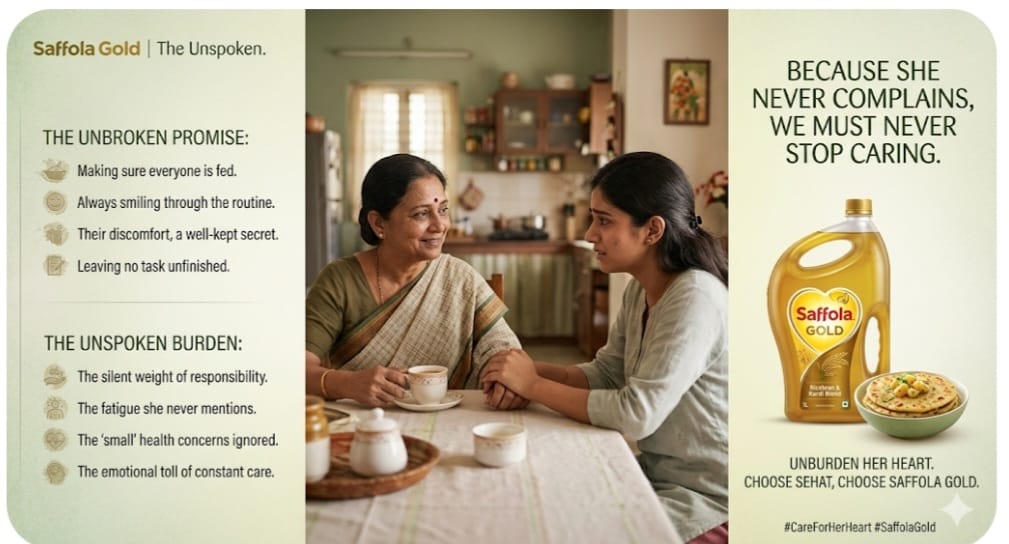
Saffola Gold’s new campaign centres on the “silent truths” mothers rarely articulate — exhaustion, emotional pressure and the invisible labour attached to caregiving roles. Instead of positioning mothers through celebratory stereotypes, the campaign leans into vulnerability and everyday emotional realities.
The campaign matters because it reflects a broader shift underway in Indian advertising: brands are moving away from idealised depictions of family roles toward more emotionally layered storytelling. Categories linked to health, nutrition and wellness are increasingly using cultural insight as a strategic differentiator rather than relying solely on functional messaging.
For Saffola Gold, the positioning also aligns with evolving consumer expectations around preventive health and holistic wellbeing, particularly among urban family audiences.
What This Means for Advertisers
For marketers, the campaign signals how emotional authenticity is becoming central to effectiveness in crowded FMCG categories. Indian consumers are showing fatigue toward overly polished “perfect family” advertising, especially on digital platforms where relatability drives stronger engagement and sharing behaviour.
The strategic layer is important.
Women-focused narratives in Indian advertising are gradually shifting from empowerment slogans to nuanced representations of emotional labour, mental load and family responsibility. That transition creates more culturally credible storytelling opportunities for legacy brands.
It also reflects the growing overlap between wellness marketing and social commentary. Brands are increasingly expected to participate in conversations around care, stress and emotional wellbeing — particularly among millennial households.
Our insight
The challenge for brands now is consistency. Emotional storytelling works only when product positioning, media strategy and long-term brand behaviour support the narrative beyond a single campaign cycle.