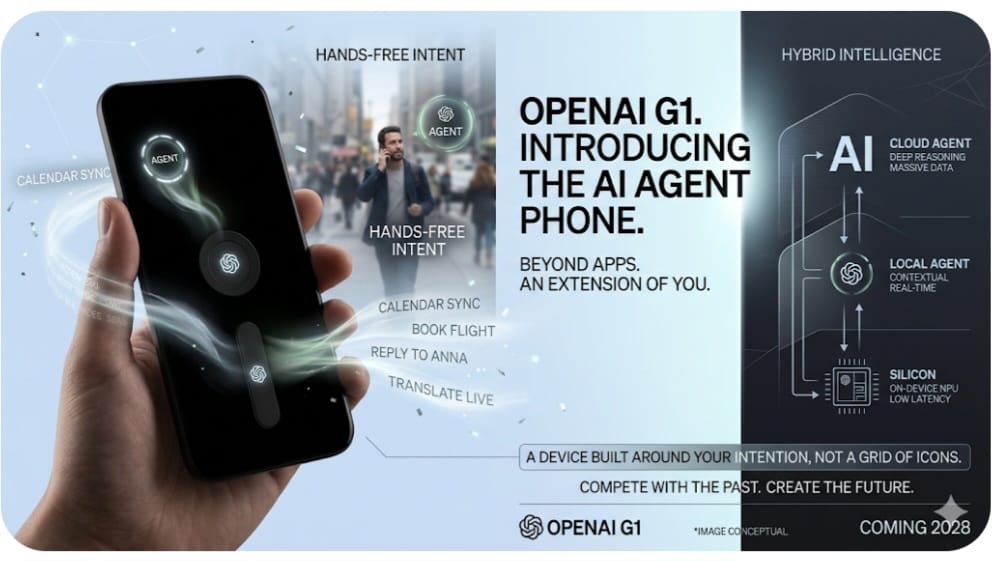
OpenAI is said to be exploring an AI-native smartphone built around autonomous agents rather than traditional app-based interfaces. The device is positioned to challenge incumbent ecosystems dominated by Apple and Samsung by rethinking how users interact with software — moving from tapping apps to delegating tasks.
This matters because smartphones are the primary gateway to digital media consumption. Any disruption at the OS or interface level has direct implications for how consumers discover content, services and brands.
The strategic read
If AI agents become the primary interface, the rules of visibility will change materially.
From apps to intents: Discovery could shift from app stores and search to AI-driven task completion. Brands may need to optimise for agent recommendations rather than user clicks.
Media inventory disruption: Traditional formats — display ads, in-app placements, even search ads — risk dilution if agents mediate interactions end-to-end.
Data and control: Platform owners currently control user data and distribution. An AI-led OS could redistribute that power, or concentrate it further within a new gatekeeper layer.
For India, where Android-led ecosystems dominate and app-based growth is central to D2C and fintech, this signals a potential reset in acquisition strategies over the next 3–5 years.
Our insight
If interfaces shift from screens to agents, marketing will move from buying attention to earning execution.