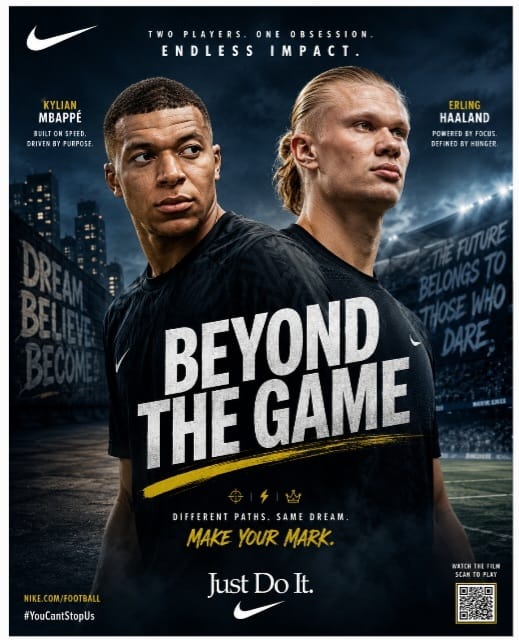
Nike’s newest campaign places two of world football’s most recognisable players—Kylian Mbappé and Erling Haaland—at the centre of its marketing narrative. While the campaign celebrates on-field excellence, its larger objective is to reinforce Nike’s position within football culture through athlete-led storytelling. Nike Builds on Football’s Star Economy The campaign arrives at a time when global football remains one of the few media properties capable of delivering consistent cross-border attention. By leveraging elite athletes rather than tournament-specific sponsorships, Nike ensures its brand remains part of fan conversations regardless of the competition calendar. For marketers, it is another example of sport being used not just as media inventory but as a long-term brand-building platform. The Strategic Shift: From Event Marketing to Cultural Ownership The campaign highlights a broader trend in sports marketing. Brands are increasingly investing in athletes as enduring cultural assets rather than relying solely on event-based visibility. For Nike, Mbappé and Haaland represent more than sporting success. They embody aspiration, youth culture and social media influence—qualities that extend the brand’s reach beyond football audiences. What It Means for the Industry The value of sports marketing is steadily moving from sponsorship rights to intellectual property built around athletes, creators and communities.
Indian marketers are following a similar playbook. As sports consumption fragments across streaming, short-form video and creator ecosystems, brands are looking for personalities who can sustain engagement across platforms and seasons. Our insight In a world of fragmented attention, the most effective sports campaigns are no longer built around matches. They are built around people fans choose to follow every day.