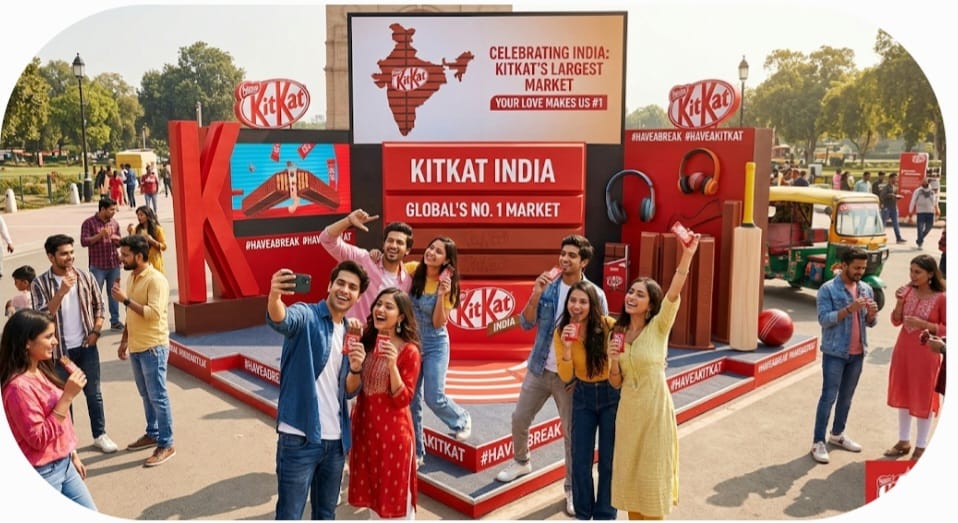
India becoming KitKat’s biggest market is less about chocolate alone and more about how mass FMCG brands are adapting to changing consumption behaviour across urban and semi-urban consumers. The Nestlé brand, built globally around the “Have a Break” positioning, has benefited from India’s expanding convenience retail network, affordable pricing architecture and mobile-first youth culture. The development matters because confectionery growth in India is increasingly being driven by frequency rather than premiumisation alone. Smaller pack sizes, wider distribution and digital-led cultural relevance have made impulse snacking more scalable than before. For multinational FMCG companies, India is no longer only a future-growth narrative — it is now a volume engine influencing global business rankings.
What This Means for Advertising and Media For advertisers, KitKat’s rise reflects how legacy brands are successfully recalibrating for short-attention consumer ecosystems. The brand has consistently remained culturally visible through meme-friendly communication, gaming integrations, creator collaborations and contextual digital campaigns built around stress, work breaks and entertainment moments. Importantly, the “break” proposition translates well across India’s fragmented media landscape. It works equally across television, cricket sponsorships, quick commerce placements, Instagram reels and office-snacking occasions.
The Strategic Read The shift also reinforces the growing importance of regional penetration. Consumption growth is increasingly coming from smaller cities where affordable indulgence categories continue to scale rapidly through modern trade and e-commerce expansion. India becoming KitKat’s largest market signals something larger for global marketers. Our insight For multinational consumer brands, India is no longer just a localisation challenge. It is increasingly becoming the market that defines global growth trajectories.