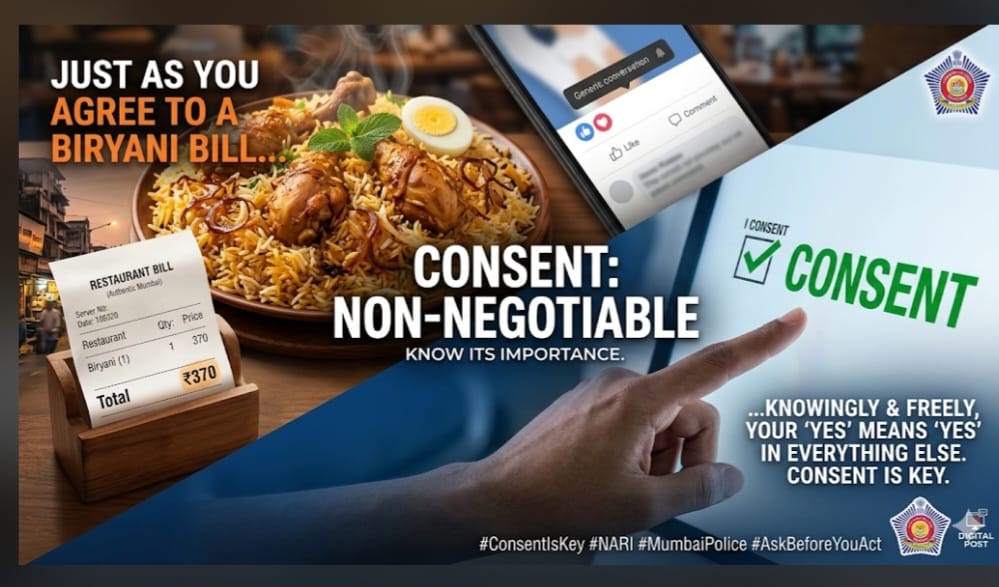
Mumbai Police has tapped into one of the internet’s most discussed recent incidents—the viral controversy surrounding a ₹370 biryani order—to deliver a message about consent. Using a familiar reference point from online culture, the department reframed the debate into a broader reminder that assumptions should never replace explicit agreement. Newsjacking with a public service objective The post follows a growing trend among public institutions that use social media conversations as real-time communication opportunities. Rather than issuing conventional awareness messages, authorities are increasingly embedding public-interest messaging within discussions that audiences are already engaged with. Why this matters for marketers The execution highlights the continued evolution of newsjacking as a communication tool. Traditionally associated with brands seeking relevance, the approach is now being adopted by government bodies and public institutions looking to increase message recall without increasing media spend. For marketers, the lesson is less about the specific creative and more about timing. In a fragmented media environment, relevance is increasingly determined by participation in culture rather than interruption of it. Messages tied to ongoing conversations often travel further because audiences already understand the context. The campaign also demonstrates how social media teams are becoming real-time editorial units. Success increasingly depends on identifying cultural moments, assessing brand fit and responding before the conversation moves on. Our insight The most effective moment marketing today isn't about inserting a brand into a trend—it's about using a trend to make an existing message impossible to ignore.
Agency News
Mumbai Police Uses Viral Biryani Debate to Deliver a Lesson on Consent