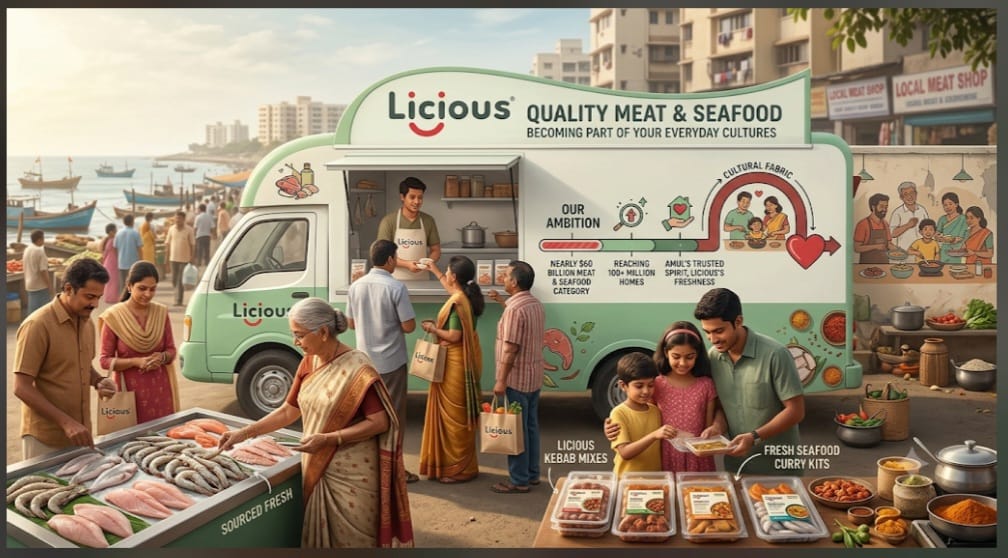
Direct-to-consumer meat and seafood brand Licious is shifting its marketing strategy beyond product-led communication, aiming to reshape how Indians perceive, cook, and consume meat. Rather than relying solely on messaging around freshness, quality, pricing, and convenience, the company is investing in content-driven storytelling to build stronger emotional and cultural connections with consumers.
From Functional Retail to Cultural Relevance
Operating in India’s nearly $60 billion (approximately ₹5.67 lakh crore) meat and seafood market, Licious seeks to transform a traditionally functional retail category into a branded consumer experience, positioning itself as a household name that extends beyond transactions. Licious’ strategy reflects a broader evolution in Indian branding, where category leadership is increasingly driven by cultural relevance rather than product superiority alone.
Building India’s ‘Amul’ of Meat and Seafood
Licious’ long-term ambition is to become the defining brand of the category, much like Amul has become synonymous with dairy. Speaking about the vision, Varun Khanna, Senior Vice President – Marketing, Licious, said the company’s success will be measured when consumers naturally say, “Licious order karte hain?” instead of asking to order chicken—signifying true cultural integration rather than simple brand recall.
The Last Word
As content becomes a long-term brand-building asset, companies that successfully shape consumer language, habits, and identity are likely to secure stronger loyalty and sustainable market leadership.