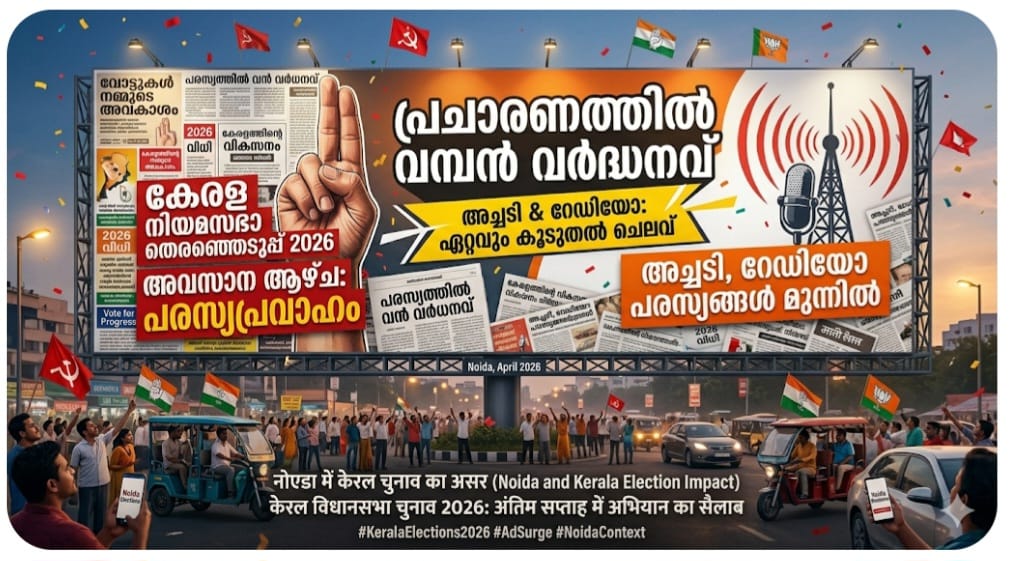
In the closing stretch of the Kerala Assembly Elections, political parties sharply increased advertising spends, with print and radio emerging as primary channels. The late surge reflects a tactical shift to high-frequency, high-trust media as voting nears — prioritising reach among undecided and older voter segments.
This matters because, despite the rise of digital campaigning, legacy media continues to play a decisive role in time-sensitive, high-stakes communication. The final week remains a critical window where recall, credibility and repetition outweigh experimentation.
The strategic read
The media mix in Kerala offers three clear signals for the wider industry:
Print’s resilience in trust-led communication: Newspapers continue to command authority in political messaging, particularly in regional markets with high literacy and strong readership habits.
Radio’s efficiency in frequency building: As a cost-effective medium, radio enables rapid repetition — crucial in the final persuasion phase.
Digital’s supporting role: While digital drives early engagement and targeting, last-mile influence still leans on mass media for scale and credibility.
For marketers, especially in categories like BFSI, healthcare and public sector outreach, this reinforces the importance of channel sequencing — digital for discovery, traditional for conversion.
Our insight
In moments that demand certainty, advertisers still fall back on media that feels authoritative, not just addressable.