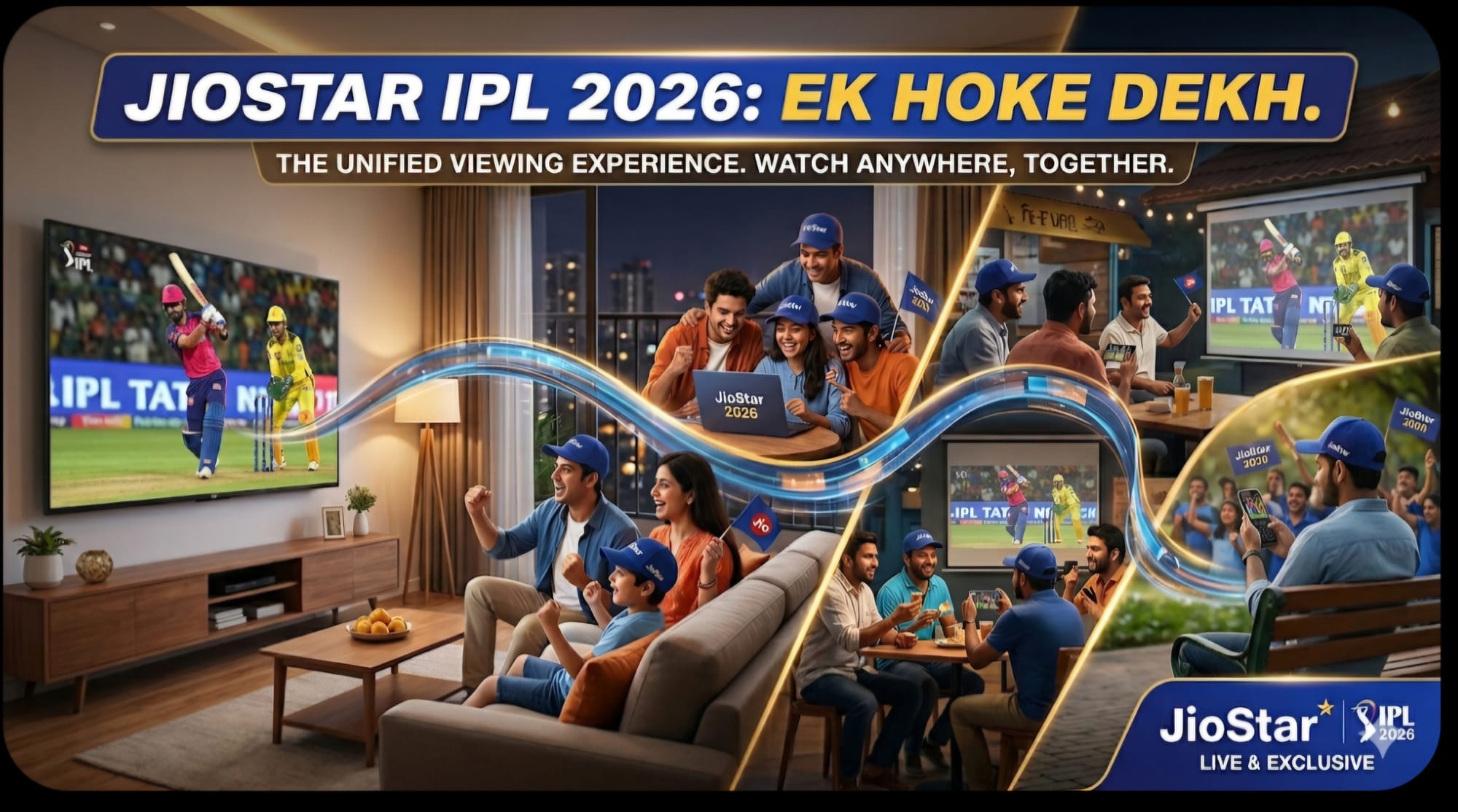
JioStar has rolled out its ‘Ek Hoke Dekh’ campaign for IPL 2026, anchoring communication around collective viewing and platform integration. The campaign arrives at a time when the IPL ecosystem is no longer just about reach, but about controlling fragmented audiences across linear TV and digital. The messaging is clear: bring audiences together under one unified consumption experience — across screens, formats, and access points. For advertisers, this is less about storytelling and more about scale consolidation.
The strategic read — aggregation over fragmentation
The campaign reflects a larger industry shift. With media consumption splintered across OTT platforms, short-form video, and regional feeds, the value is moving toward aggregation layers that can re-bundle audiences at scale. JioStar is effectively reframing IPL not just as a sports property, but as a distribution backbone. By emphasizing “togetherness,” it signals a push toward interoperable ecosystems — where telecom, streaming, and broadcast operate as one stack. For brands, this reduces planning complexity. Instead of splitting budgets across platforms, the pitch is a unified buy with deeper data integration and potentially better attribution. This also puts pressure on standalone OTT players, who may struggle to match bundled reach without similar infrastructure advantages.
What this means going forward
Expect more platform-first narratives replacing content-first campaigns in sports marketing. The battleground is shifting from creative differentiation to control over consumer access and data.
One sharp observation
'Ek Hoke Dekh' isn’t about unity as an emotion — it’s about unity as a media strategy.