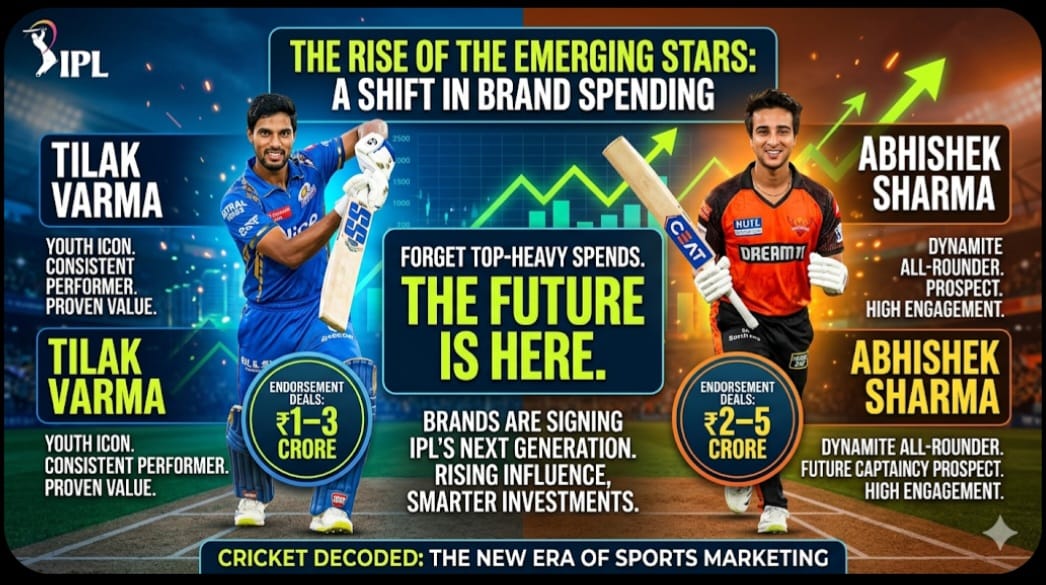
Brands in the Indian Premier League ecosystem are redirecting endorsement budgets towards younger players such as Tilak Varma and Abhishek Sharma, with deal values in the ₹1–5 crore range.
This marks a notable departure from the long-standing model where a handful of marquee names commanded a disproportionate share of brand spends. Instead, advertisers are diversifying portfolios with multiple mid-tier endorsements.
The strategic shift: portfolio over powerhouses
The move reflects a recalibration in how brands evaluate ROI on celebrity endorsements.
Key drivers include: • Cost efficiency: Signing 3–5 emerging players at ₹1–5 crore each offers broader visibility than a single high-cost star. • Relevance with younger audiences: Newer players resonate more strongly with Gen Z and digital-first consumers. • Content scalability: Multiple athletes enable always-on content across formats, from reels to regional activations.
For advertisers, the IPL is no longer just about association with top teams or icons, but about building a network of relatable faces across the season.
What this means for the industry
The endorsement market is becoming more distributed. Talent valuation is shifting from legacy fame to current form, social media traction, and cultural relevance.
We foresee: • More short-term, performance-linked endorsement deals • Increased role of talent agencies in packaging emerging players • Brands building “teams of ambassadors” instead of single faces
Our insight
In IPL marketing today, depth of roster is replacing height of stardom.