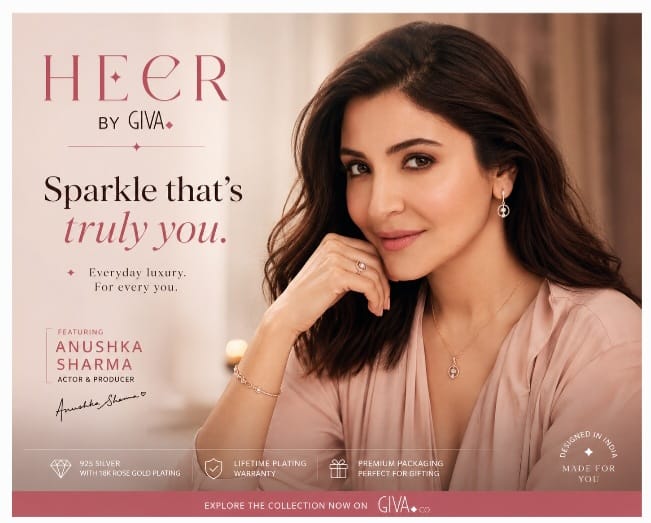
Digital-first jewellery brand GIVA has expanded its celebrity-led branding play with a new campaign for Heer by GIVA, fronted by Anushka Sharma. The campaign positions the collection around modern femininity, accessible luxury and occasion-led self-expression — categories that are increasingly driving growth in India’s organised jewellery market. The timing is important. India’s fine jewellery sector is undergoing a structural shift as younger consumers move from investment-first purchases toward style-led, lightweight and everyday jewellery consumption. Digital-native brands are now competing not just on pricing and design, but on emotional storytelling and cultural relevance.
Celebrity equity meets D2C scale ambitions
For Heer by GIVA, Sharma’s association helps bridge trust, aspiration and mass familiarity — critical for a category where purchase decisions remain highly emotion-driven. Unlike legacy jewellery advertising that leans heavily on weddings and family occasions, newer campaigns are targeting independent female buyers and daily wear usage. The strategy also reflects how D2C brands are increasingly adopting legacy FMCG playbooks: celebrity endorsements, premium visual identity and high-frequency digital campaigns to accelerate brand recall.
What this signals for India’s advertising market
Jewellery advertising in India is moving toward fashion-category behaviour. That means shorter campaign cycles, creator-led amplification, social commerce integration and influencer-heavy discovery funnels. For agencies and media planners, this creates demand for content systems that balance performance marketing with long-term brand building. Celebrity partnerships are no longer limited to scale brands — digitally native players are now using them to signal credibility and category maturity.
Our insight
India’s new-age jewellery battle is no longer about gold weight or price transparency alone. It is increasingly about owning cultural identity before legacy retail catches up.