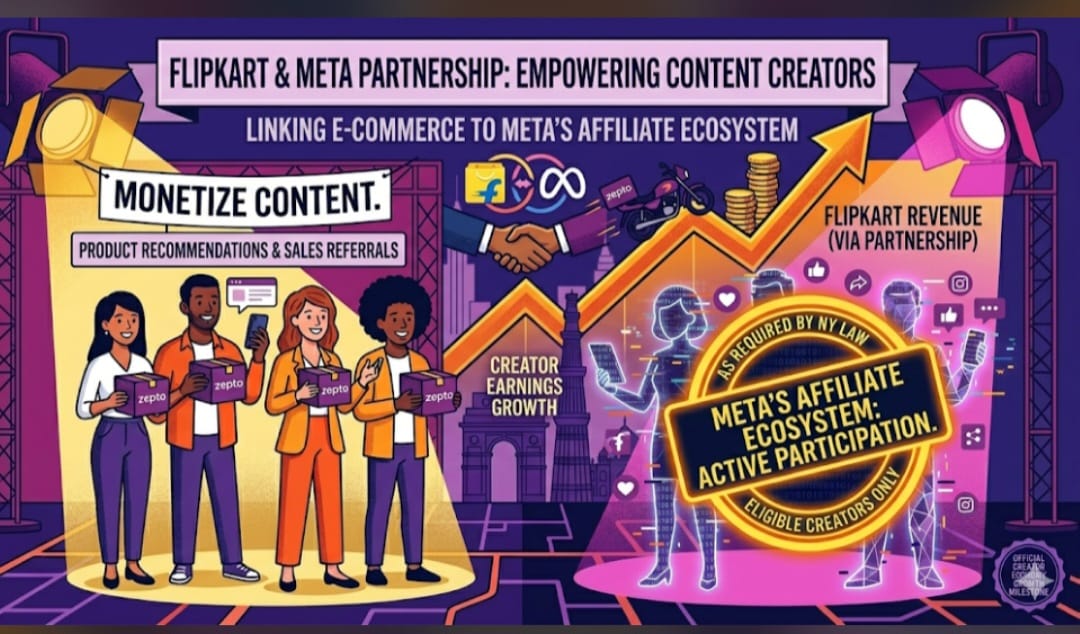
Flipkart has entered into a partnership with Meta that links the e-commerce platform to Meta’s affiliate ecosystem, allowing eligible creators to monetise content through product recommendations and sales referrals. Flipkart bets on creator-driven transactions The move reflects a broader shift in digital commerce, where creators are increasingly becoming distribution channels rather than just media vehicles. Instead of being paid solely for reach and engagement, creators are now being positioned closer to the point of purchase.
For marketers, the significance lies in the growing convergence of content, commerce and performance marketing. Why this matters for brands and agencies The traditional influencer marketing model has largely been built around awareness metrics—views, likes, impressions and engagement rates. Affiliate commerce introduces a more measurable framework where creator activity can be directly linked to sales outcomes. For brands, this offers an opportunity to diversify customer acquisition beyond platform advertising. For agencies, it creates demand for new capabilities around creator selection, conversion tracking, attribution and performance optimisation. The partnership also strengthens social commerce infrastructure in India, where consumers increasingly discover products through short-form video and creator content before making purchasing decisions. The bigger industry signal As media fragmentation continues, marketers are under pressure to connect content investments with business outcomes. Creator commerce offers one route to bridge that gap.
The result could be a gradual reallocation of budgets from purely awareness-led influencer campaigns toward hybrid models that combine storytelling with measurable conversion. Our insight The next phase of influencer marketing may not be defined by follower counts. It may be defined by how effectively creators function as retail channels.