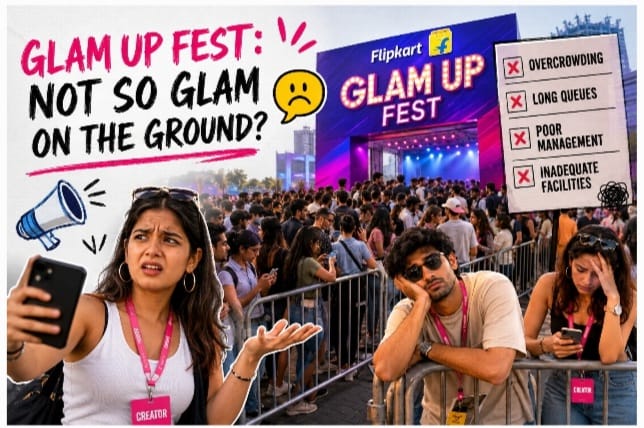
Flipkart’s Glam Up Fest has come under scrutiny after several creators publicly complained about overcrowding, extended waiting times and poor event management. When Creator Events Become the Story Social media posts from attendees suggested that the scale of invitations significantly exceeded the venue’s ability to accommodate participants comfortably, with some creators claiming that nearly 6,000 people were invited despite infrastructure appearing insufficient for a fraction of that number. The episode matters because creator events are no longer peripheral marketing activities. They have become a core part of brand-building, community engagement and influencer relationship management. The Bigger Challenge for Brands As India's creator economy expands, brands are increasingly investing in large-scale experiential events designed to generate content, advocacy and social buzz. However, scale alone is no longer a measure of success. For creators, event experiences directly influence future brand perception. Poor logistics, long wait times and lack of access can quickly become public content, often reaching audiences far beyond the event itself. In effect, attendees are both guests and media channels. The incident underscores a broader industry reality: operational execution is now a communications function. A poorly managed creator event can generate as much visibility as a well-executed campaign—just not the kind brands want. What Marketers Should Take Away The creator economy is becoming more professionalised, and expectations are rising accordingly. Access, hospitality and event design are increasingly being evaluated alongside campaign briefs and commercial partnerships. Our insight In creator marketing, the experience is the campaign. When logistics fail, the event itself becomes the content.
Agency News
Flipkart Glam Up Fest Backlash Highlights Growing Execution Risks in India’s Creator-Led Events