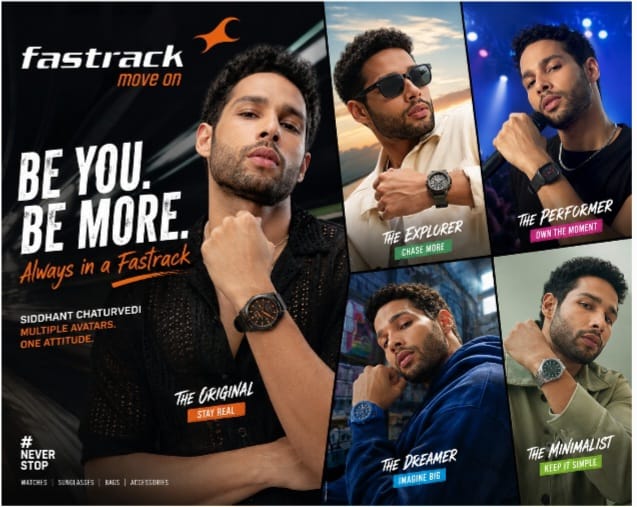
Fastrack’s latest campaign places Siddhant Chaturvedi across multiple character versions of himself, using shifting personalities and visual identities to position the brand around experimentation, self-expression and fluid youth culture. The campaign matters because it reflects how youth marketing in India is evolving beyond aspiration-led celebrity endorsements into personality-driven storytelling formats. Instead of using a celebrity purely for recall, brands are increasingly building campaigns around fragmented digital identities familiar to Gen Z audiences.
Why the creative approach stands out
The “multiple avatars” construct mirrors how younger consumers behave online — switching between moods, aesthetics and social personas across platforms. Fashion and accessories brands, particularly in the affordable lifestyle segment, are now aligning creative strategy with this behavioural reality. For Fastrack, the approach also helps modernise a brand long associated with college youth and entry-level fashion. The campaign attempts to keep the brand culturally relevant in a market where D2C fashion labels, sneaker culture and creator-led style trends are reshaping attention economics.
The larger industry signal
The campaign reflects a broader shift in Indian advertising toward identity-based segmentation rather than demographic segmentation alone. Agencies are increasingly designing campaigns around internet-native behaviour patterns — avatars, alter egos, meme culture and self-curated identities. It also highlights how celebrity usage is changing. Film actors are now expected to behave more like creators inside campaigns: adaptive, self-aware and format-flexible across short-form digital ecosystems.
Our insight
In youth advertising today, consistency matters less than relatability — and brands are increasingly building campaigns around that fragmentation instead of resisting it.