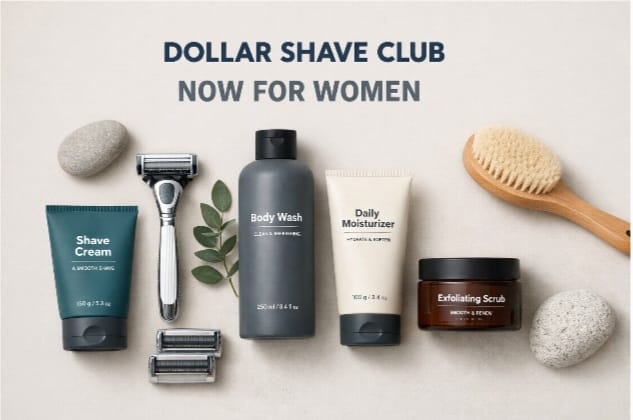
Dollar Shave Club (DSC), long positioned as a men’s grooming disruptor, has introduced its first product line for women. The brand’s core proposition is clear: strip away what it calls “pink pastel” clichés that dominate female grooming aisles. Instead, DSC is leaning on functional design, neutral branding, and straightforward communication. This matters because DSC isn’t just extending its portfolio—it is challenging entrenched category codes that have defined women’s personal care marketing for decades.
The Strategic Shift — Beyond SKU Expansion
Globally, gender-neutral and anti-stereotype branding has been gaining traction, particularly among younger consumers. DSC’s move signals a pivot from a gender-specific subscription model to a broader, more inclusive grooming ecosystem. Importantly, this isn’t a “for women” play in the traditional sense. It’s a reframing of the category itself—where utility and performance override gender-coded aesthetics.
What This Means for India
India’s personal care market still leans heavily on visual and cultural cues—colour palettes, language, and celebrity endorsements—to signal gender. However, urban Gen Z consumers are increasingly questioning these constructs.
For Indian marketers, this presents two signals:
• Design codes are up for disruption: The reliance on “feminine” packaging may start to feel dated. • Narrative over segmentation: Brands can win by aligning with evolving identity narratives rather than rigid gender binaries. D2C grooming brands in India, in particular, have the agility to test such positioning faster than legacy FMCG players.
Our insight
Dollar Shave Club’s entry into women’s grooming isn’t about inclusion alone—it’s about rewriting category signals. The question for brands is not whether to follow, but how far they are willing to unlearn.