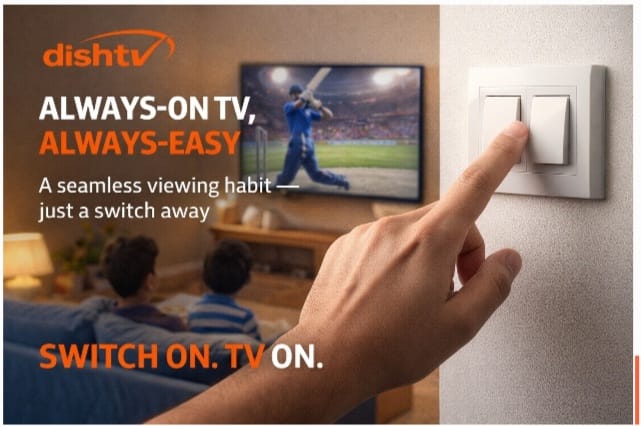
Dish TV has rolled out a campaign that reframes everyday “switch” moments as triggers for uninterrupted viewing. By turning small, habitual actions into cues for content consumption, the brand is attempting to reposition linear TV as an always-on medium in a landscape increasingly dominated by on-demand platforms. The approach matters as DTH players face sustained pressure from OTT services and shifting viewer habits.
The strategic read
At its core, this is a behaviour-led campaign. Instead of competing head-on with OTT on content depth, Dish TV is anchoring itself in accessibility and immediacy — two attributes where broadcast still holds an advantage.
The use of micro-interventions signals a shift in how legacy media brands are thinking about engagement: less about appointment viewing, more about ambient presence. By embedding the brand into routine actions, Dish TV is effectively attempting to reduce the “decision fatigue” associated with content choice — a known friction point in OTT ecosystems.
From a media strategy lens, this also reflects a broader pivot toward contextual creativity. Rather than relying on high-decibel campaigns, brands are increasingly investing in ideas that integrate with consumer environments, both physical and behavioural.
What this means for the industry
Expect more traditional media players to lean into utility-driven narratives — positioning themselves not just as content providers, but as seamless, low-effort entertainment options. Agencies will need to design for context, not just channels.
Our insight
In a fragmented viewing market, the real battle is no longer for attention — it’s for habit.