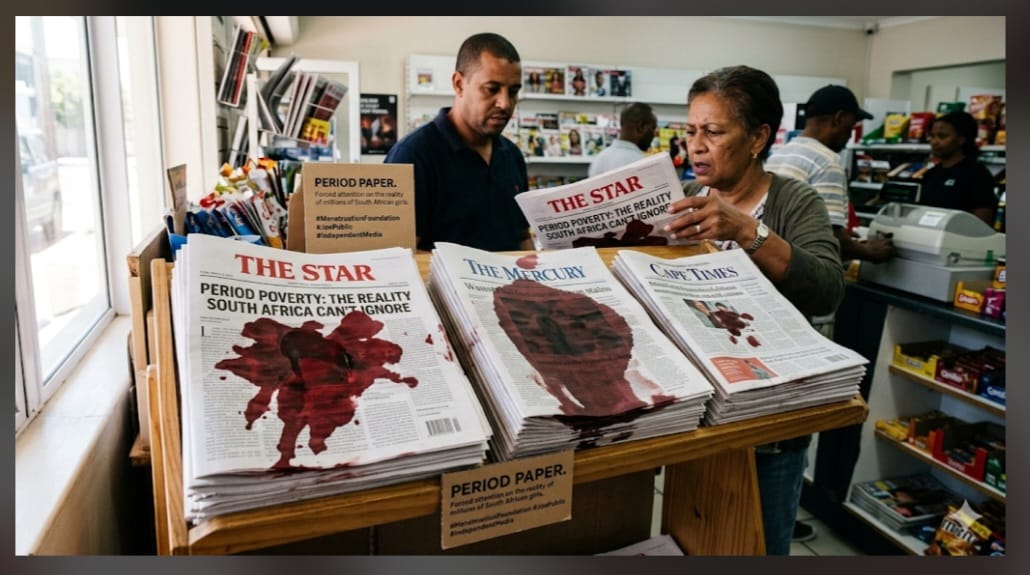
Readers of The Star, The Mercury and Cape Times in South Africa recently opened their newspapers to find what appeared to be menstrual blood stains splashed across the front page and bleeding through the pages beneath. The activation, titled Period Paper, was created by agency Joe Public in partnership with the MENstruation Foundation and Independent Media. Its objective was straightforward: force public attention onto period poverty and the realities faced by millions of girls who lack access to sanitary products. When the medium becomes the message The campaign's central insight is uncomfortable but effective. For many girls living in poverty, newspapers and other improvised materials are still used as substitutes for menstrual products. By turning the newspaper itself into a symbolic sanitary pad, the campaign collapsed message and medium into a single visual experience. What marketers should take away The significance of this work extends beyond social awareness. At a time when brands compete for attention in fragmented media environments, Period Paper demonstrates how traditional media can regain relevance through physical disruption. The campaign did not rely on technology or celebrity endorsement; it relied on context, symbolism and a clear understanding of audience behaviour. For Indian advertisers, the lesson is particularly relevant. Menstruation remains a category where communication has evolved, but stigma and access challenges persist. Campaigns that move beyond awareness into cultural intervention are increasingly likely to earn attention, discussion and media value. Our insight The most effective purpose-led campaigns don't just tell audiences about a problem. They make audiences experience a small part of it. Period Paper did exactly that—with nothing more than ink, paper and a powerful insight.
Agency News
Blood-Stained Newspapers Turn Print Into a Statement on Period Poverty