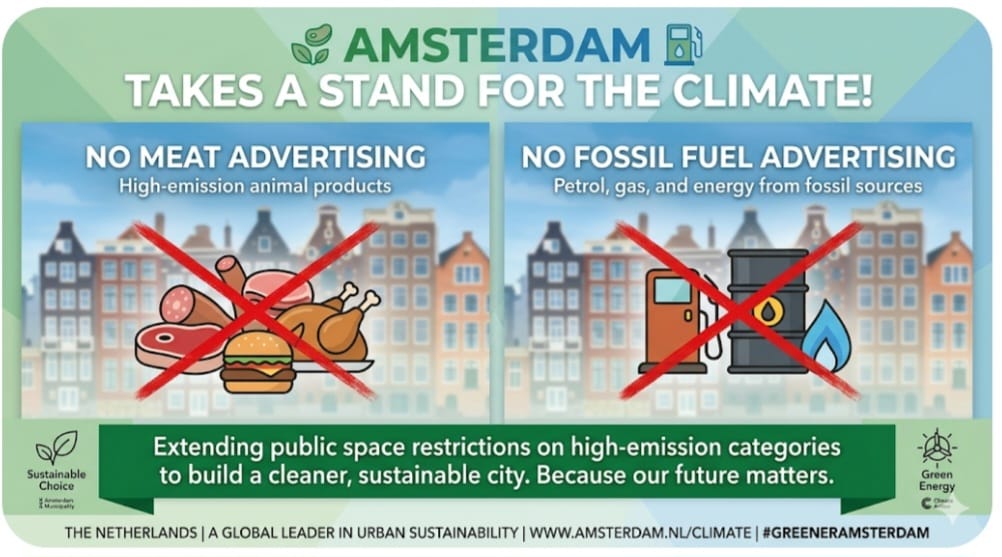
Amsterdam has moved to prohibit advertising for meat and fossil fuel products across its public spaces, including billboards, transit shelters, and other out-of-home (OOH) inventory. The decision builds on earlier restrictions targeting high-carbon categories and aligns with the city’s broader climate goals.
This is significant because it shifts sustainability from messaging to media access. Instead of regulating claims, the city is regulating category presence — determining which industries can advertise in publicly controlled environments.
From content regulation to category exclusion
Traditionally, ad regulation has focused on misleading claims or harmful messaging. Amsterdam’s move is structurally different: it removes entire categories from the media ecosystem. Meat and fossil fuel brands — both linked to higher carbon emissions — now lose visibility in one of the most effective mass-reach channels.
For OOH operators, this creates an immediate inventory gap, forcing a pivot toward alternative categories such as mobility, tech, finance, and low-impact consumer goods.
Implications for Indian media and brands
While India is unlikely to see immediate replication, the direction of travel is clear. ESG considerations are beginning to influence not just brand narratives but media policy. Municipal bodies and regulators could increasingly scrutinise categories like fossil fuels, betting, or even ultra-processed foods in public media.
For advertisers, this raises long-term questions on category risk and media diversification. For agencies, it signals a future where planning is shaped as much by policy as by audience data.
Our insight
When cities start curating advertisers, media planning stops being neutral — it becomes socio-political.