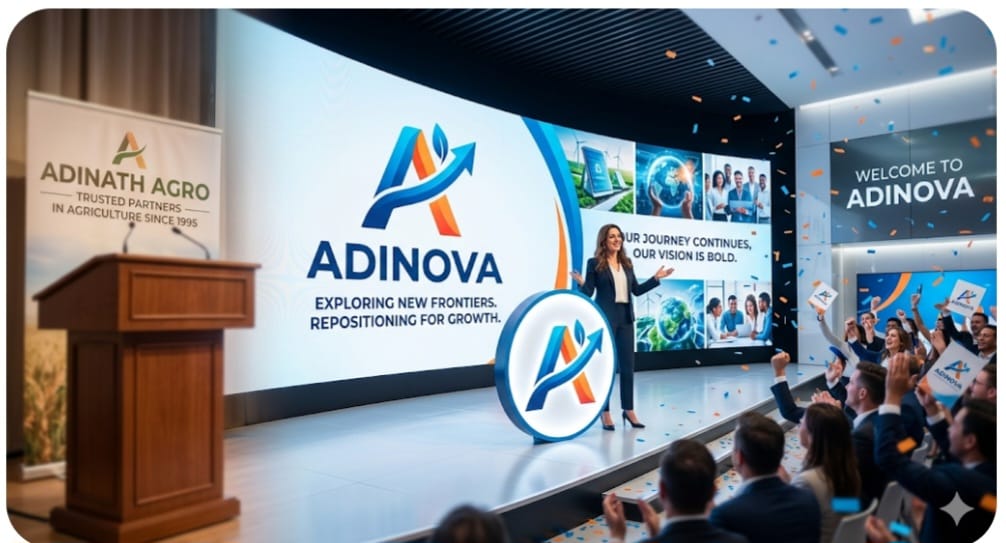
Adinova, formerly known as Adinath Agro, has unveiled a new brand identity as it looks to modernise its market perception and widen its business relevance beyond traditional agricultural associations. The renaming signals a familiar trend in Indian business branding: legacy sector companies increasingly adopting cleaner, technology-oriented identities to appeal to newer stakeholders including investors, younger consumers, channel partners and digital-first markets. The shift from “Agro” to “Nova” is not cosmetic. It reflects how companies in manufacturing, agriculture and industrial sectors are repositioning themselves through brand language associated with innovation, scalability and future-readiness.
Why the rebrand matters
India’s B2B and industrial sectors are witnessing a branding transition once largely limited to consumer startups and tech firms. As competition intensifies and digital discoverability becomes critical, businesses are recognising that corporate identity now influences: • investor perception, • recruitment attractiveness, • export positioning, • and partnership credibility.
For marketers and agencies, this expands the role of branding from communication support to strategic business architecture.
The advertising industry takeaway
Rebranding mandates from legacy Indian companies are becoming more frequent — particularly across agriculture, chemicals, manufacturing and infrastructure sectors. This creates demand for corporate storytelling, identity system design, digital transformation communication, and employer branding campaigns.
Importantly, these businesses are also becoming larger spenders across LinkedIn, trade media, B2B content and regional market outreach. The shift indicates that brand-building is no longer seen as a consumer-only exercise in India’s industrial economy.
Our insight
The Adinova transition reflects a broader market reality: even traditional sectors now need modern brand identities to compete for capital, talent and visibility in a digital-first business environment.