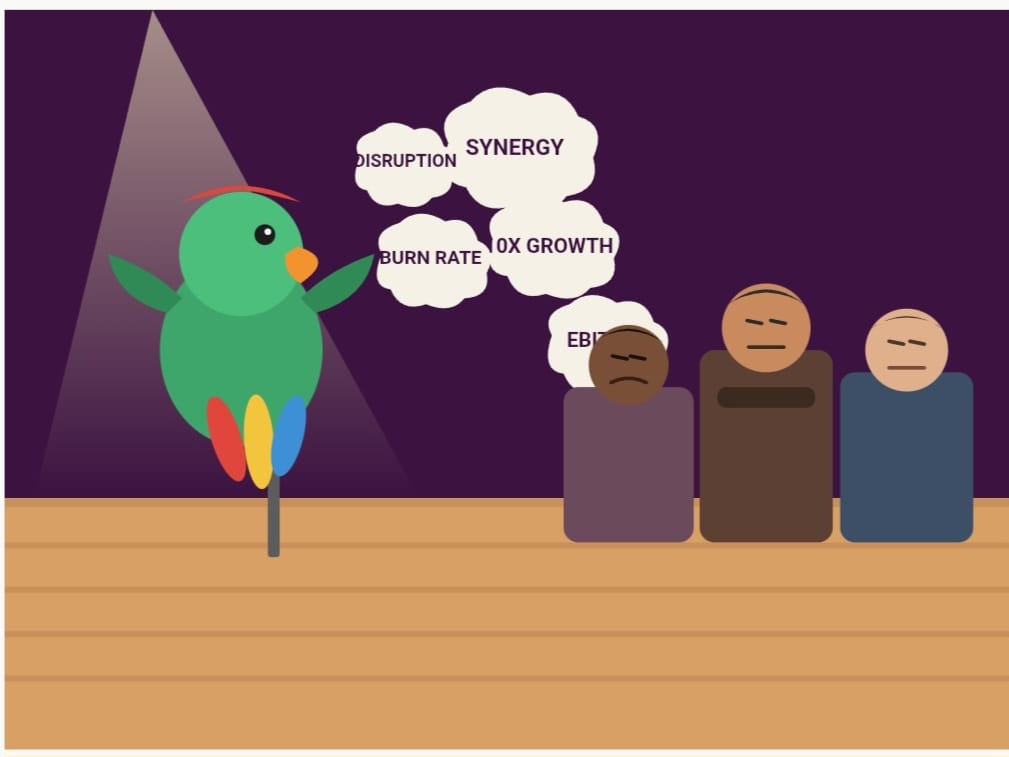
Ahead of its sixth season, Shark Tank India has unveiled a mascot with a pointed message: a parrot named Tota who confidently throws around terms such as valuation, burn rate and EBITDA, believing that startup buzzwords alone can impress the Sharks.
Conceived by creative agency The Script Room, the campaign is less a marketing gimmick and more a diagnosis of a cultural moment — one where valuation, burn rate and EBITDA have become everyday vocabulary, prompting the show to ask whether the language of entrepreneurship has begun to overshadow the business itself.
The Bird That Talks the Talk
The timing is deliberate. India's startup ecosystem has surpassed 2.23 lakh recognised ventures, yet nearly 90% fail within five years — a statistic that exposes a widening gap between founders who can sound credible and those who can actually build. Boat co-founder and Shark Aman Gupta captured the show's underlying frustration bluntly: "If repeating startup buzzwords was enough to build a business, we would all be investing in parrots." His remark reframes five seasons of pitch-tank experience into a single insight — that anyone can memorise the language of startups, but only founders who truly understand their business can build one.
What the Sharks Have Experienced
While the campaign doesn't name specific contestants, its premise is rooted in a recurring pattern the show's investors have flagged repeatedly: pitches loaded with polished terminology but thin on unit economics, customer insight or a defensible moat.
The show has helped bring entrepreneurship into mainstream conversations over five seasons, which has a double edge — it democratised the vocabulary of startups faster than it spread the discipline behind them. Tota is essentially every founder who has learned to perform confidence before earning it.
Signal for Aspiring Entrepreneurs
For India's early-stage founders, the message is unambiguous: investors are increasingly discounting polish and rewarding conviction, execution, resilience, and a deep understanding of the fundamentals.
In a funding environment growing more selective, that shift in emphasis — from narrative to numbers — could meaningfully alter how founders prepare pitches, hire early teams and even structure their businesses.
The Last Word
The real innovation here isn't Tota — it's timing. By launching this campaign at registration stage, Shark Tank India is pre-filtering its applicant pool before cameras roll, effectively using brand messaging as an editorial gatekeeping tool. If it works, expect rival platforms and B-school incubators to borrow the tactic: using cultural satire, not compliance forms, to raise the substance bar.
Whether it curbs India's high startup mortality rate is unlikely — but it may quietly reshape what "sounding like a founder" means to the next generation of applicants.