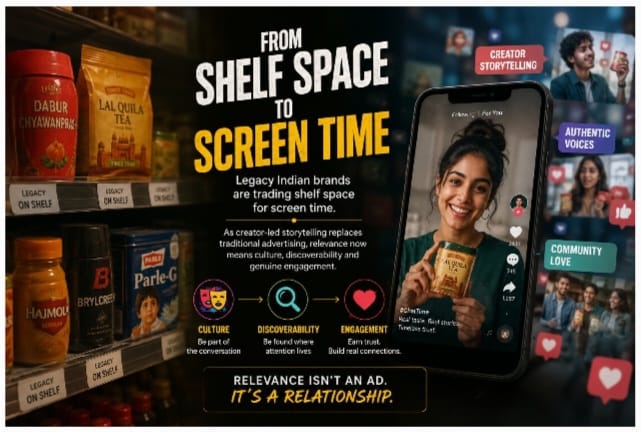
For decades, an Indian brand's success was measured in retail footprint how many shelves it occupied, how many kirana stores stocked it. That equation is breaking down. Today, a brand can dominate distribution and still be invisible to the audience that will define its next decade: consumers under 30 who discover, evaluate and buy almost entirely through their phones.
The Shift From Shelf to Screen
India's influencer marketing industry stood at roughly INR 3,000 - 3,500 crore in 2025, with projections to reach INR 4,500-5,000 crore by 2027.
Industry surveys show 87.5% of marketers plan to increase influencer budgets this year, with only 5.6% expecting cuts, a signal that this is no longer an experimental line item but a core allocation. The reason is trust, not just reach. Kantar's India research finds influencer content outperforms digital advertising on both brand favourability (15% versus 12%) and purchase intent (10% versus 9%).
67% of Indian consumers say they trust influencer recommendations over traditional advertisements. For legacy brands raised on jingles and 30-second television spots, that's a structural challenge, not a cosmetic one.
Small Creators, Outsized Influence
Scale is no longer the deciding factor in creator selection. Nano creators post the highest engagement of any tier on Instagram at 1.78% compared to just 0.33% for accounts with over a million followers, which explains why budgets are tilting toward smaller, hyper-local voices. Regional-language creators, in particular, let legacy brands re-enter conversations in Tier 2 and Tier 3 India with a cultural fluency mass advertising never had.
Formalisation, Not Fad
Growth is increasingly driven by deeper brand integration, creator professionalisation and institutional adoption of influencer-led marketing e-commerce accounting for 23% of influencer spend and FMCG close behind at 19% the exact categories where India's legacy houses sit. Tighter oversight from SEBI, ASCI and the DPDP Act is pushing what was once ad-hoc collaboration into measurable, accountable strategy.
The Last Word
The brands winning this decade won't be the ones with the biggest media budgets, they'll be the ones that let creators, not campaigns, carry the story. For legacy players, the real test isn't adopting influencer marketing; it's surrendering enough narrative control to make it authentic.
Cultural relevance can be bought in bursts, but discoverability and trust compound only when a brand shows up in the feed as often as it shows up on the shelf.