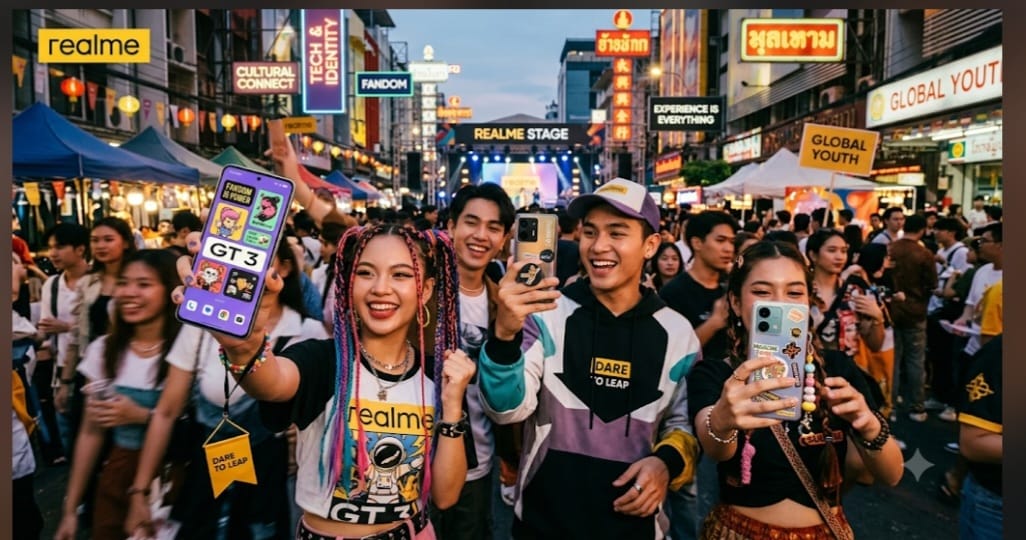
The smartphone spec race has a problem: nearly everyone has crossed the finish line. Francis Wong, realme's head of global product marketing, says over 90% of mid-range devices now carry similar core specs. When hardware converges, differentiation moves to identity, fandom and experience. realme's latest test of that thesis is the realme 16 Pro 5G Harry Potter Edition, built with Warner Bros. Discovery Global Consumer Products.
Wong points to a franchise with more than 500 million fans worldwide. The design avoids plastering references everywhere. Its centrepiece is a colour-changing Hogwarts Crest Glow, backed by a Harry Potter-themed bus activation made exclusively for India. Earlier collaborations include Coca-Cola, Naruto, Thor, Game of Thrones and Aston Martin Aramco Formula One.
The numbers behind the shift
All figures below are company-reported: • 68% of Gen Z consumers in India see brand personality and cultural identity as key purchase factors, beyond hardware. • Nearly 75% of young consumers use social platforms and creators when researching phones. • About 70% of realme's marketing investment goes to digital platforms and creator collaborations. • 60%+ of India's young smartphone users live outside major metros. • 25%+ of realme's global investment goes to India, where it has operated since 2018. Most sales fall in the Rs 20,000–35,000 band, with an even online-offline split.
What it means for marketers
First, IP partnerships work best as product design, not sticker-level licensing. The goal, per realme, is for culture to become part of how consumers experience the product. Second, discovery now happens through creators, not spec sheets. Media planners should weight creator ecosystems accordingly. Third, the growth audience is not only metropolitan. Students, first-time professionals and fandom communities in Tier-II and Tier-III cities are, in realme's view, underpenetrated.
The road ahead
realme names three pillars for its India strategy over the next three years: product AI innovation, youth cultural branding and localised omni-channel operations. Success will be judged on mid-premium market share, loyalty and becoming India's leading youth technology brand.
There is a financial logic too. Wong expects the memory-cost crunch to last beyond 2026, forcing selective investment in battery, durability and reliability. In a cost-constrained market, cultural value is a differentiator that doesn't depend on adding more silicon.
Risks remain. Licensing costs, fan scepticism of shallow tie-ins and novelty fatigue could blunt the strategy. Brands that rotate IPs without deepening the experience may find fandom is easier to rent than to earn.
The Last Word
When specs are a commodity, culture becomes the moat. But it only holds if it changes how the product feels to use, not just how the box looks. Marketers should measure fandom-led launches on loyalty and repeat purchase, not just launch-week buzz.