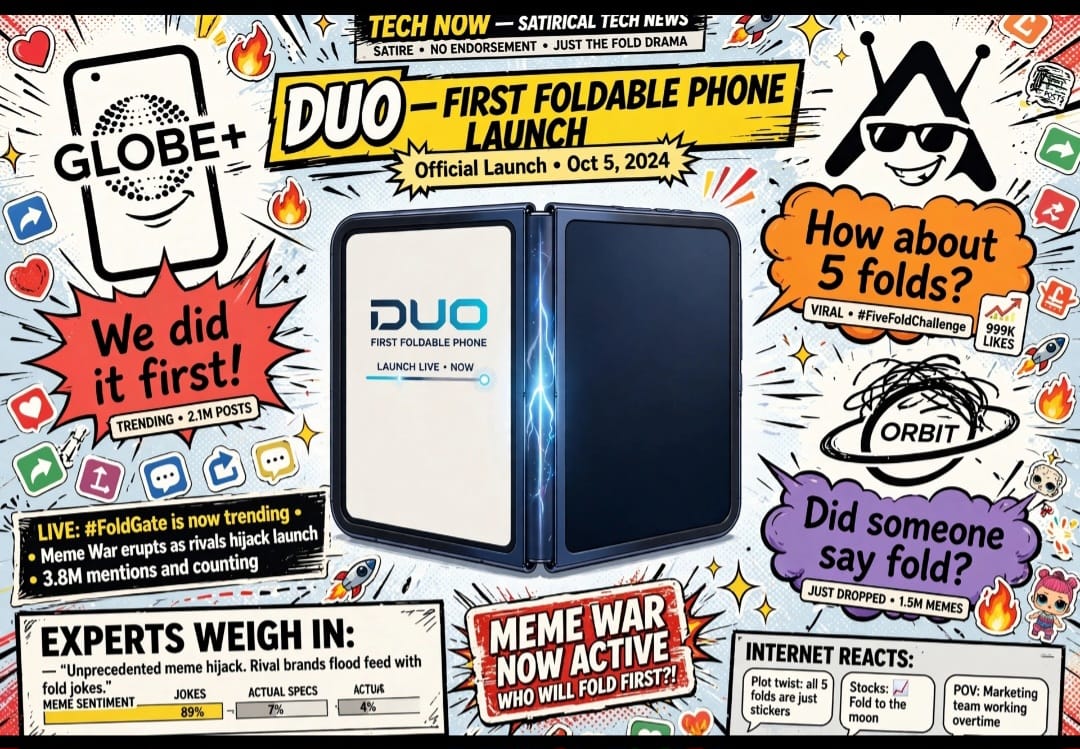
On September 9, 2026, Apple unveiled the iPhone Duo, its first foldable smartphone, at an event led by new CEO John Ternus. Priced at $1,999 with a 7.6-inch display, the launch should have dominated headlines on hardware specs alone. Instead, within minutes, competitors turned Apple's biggest reveal of the year into their own marketing battlefield and won the internet in the process.
Samsung Strikes First
Samsung Mobile US, which shipped the original Galaxy Fold back in 2019, opened fire almost instantly on X. Posts leaned on the hashtag #ItsTimeToSwitch, with lines mocking Apple's late arrival to a category Samsung has occupied for seven years, joking the device felt "very familiar" and telling followers not to expect much from the event. Samsung's posts alone reportedly drew over a million impressions more attention, by several accounts, than the iPhone Duo's actual specs.
Duolingo Enters And Gets Pulled Into the Crossfire
The name "iPhone Duo" proved irresistible bait for Duolingo, whose mascot is literally named Duo. The language app's account reacted with mock panic over "SEO" concerns and brand confusion. Samsung then jumped in, sarcastically apologizing to Duolingo and claiming solidarity as a fellow "copied" brand prompting a sharp comeback from the owl mascot about unwelcome comparisons. The three-way exchange (Apple, Samsung, Duolingo) quickly outpaced traditional coverage of the launch itself.
Motorola Plays the Long Game
While Samsung and Duolingo traded quips, Motorola took a quieter but strategically sharper route. Mid-event, it posted a teaser video on Instagram and X tracing its Razr lineage ending on a blacked-out, wider foldable silhouette captioned "Just wait for our next move." Outlets noted the device appeared to preview a new short, wide Razr Fold positioned as a direct rival to the iPhone Duo and Samsung's Galaxy Z Fold 8.
The Market Footnote
Reports noted modest stock moves the same day: Duolingo shares fell roughly 4.88%, Apple dipped about 0.28%, and Samsung's Korea-listed stock slipped around 0.19% a reminder that even viral banter sits alongside real market sentiment, however loosely connected.
The Last Word
This wasn't luck it was preparedness. Samsung, Duolingo and Motorola each had pre-built creative, tone-of-voice guidelines, and approval chains ready to deploy within minutes of a rival's keynote.
The lesson for brand and social teams: real-time marketing wins aren't improvised on the day: they're rehearsed for it. Own the reactive moment, and you may out-market the product you're reacting to.