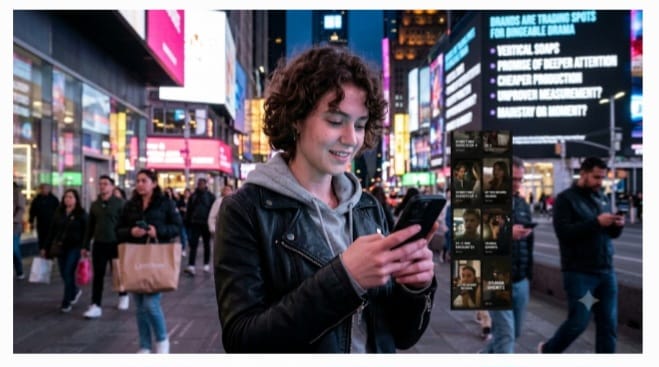
Nobody skips a cliffhanger. That is the bet brands are making as they swap the thirty-second spot for the sixty-second episode.
Why now
The audience arrived first. Microdrama app downloads grew 95.5% year-over-year in the first half of 2026, reaching 1.45 billion. Omdia puts the format's market size at $11 billion at the end of 2025. In the US, these apps have overtaken Netflix and Prime Video in mobile engagement, according to EMARKETER. Where attention goes, budgets follow.
The cost-benefit case
Economics drive the shift. A conventional commercial shoot can cost millions of dollars, while microdrama productions often carry a smaller price tag and run on faster schedules. In luxury, entire series reportedly cost between $200,000 and $550,000, a fraction of a classic campaign, and one campaign's media impact value ran 52% above the brand's average Instagram post.
Standard ad.
Production cost High, often millions
Attention model- Interruptive
Measurement- Mature, verified
Microdrama
Lower cost, weeks to produce
Selective attention, serialized
Still immature
The catch is measurement. The format lacks the standardized, third-party-verified measurement advertisers expect from established video channels. Cheap production is no bargain if results cannot be proven.
Real-world bets
P&G's Native launched "The Golden Pear Affair," billed as America's first brand co-produced feature-length microsoap. Maybelline, Dr Pepper, Marc Jacobs and Crocs have also launched branded microdrama projects. Gushers took a lighter route, sponsoring Issa Rae's existing 57-episode series instead of building its own.
Not every bet has paid off visibly. One analysis noted that P&G's dedicated site showed just 21 reactions and no hearts, saves or shares, and the company has disclosed no other viewership data. Promised attention has not yet been backed by public proof.
Fad or fixture?
India shows the gap between audience and ad money. Redseer estimates India's micro-drama ad market could reach ₹210 crore in FY27 and ₹5,000–5,500 crore by FY32, with growth depending on brand confidence the market has yet to establish. Subscriptions are about 99% of revenue today, falling to roughly 95% as advertising reaches nearly 5%.
My read is that microdramas will stay, but not as a replacement for standard advertising. Expect a split: hero films for brand building, serialized vertical stories for engagement, and sponsorships for scale. Saturation is the real risk, as dozens of apps compete for attention and oversupply looms.
The Last Word
The winners will treat microdramas as content people choose to watch, not ads in disguise. Set episode-level KPIs before writing the script, and demand verified measurement before scaling spend. Story quality, not format novelty, will decide who earns the next episode.