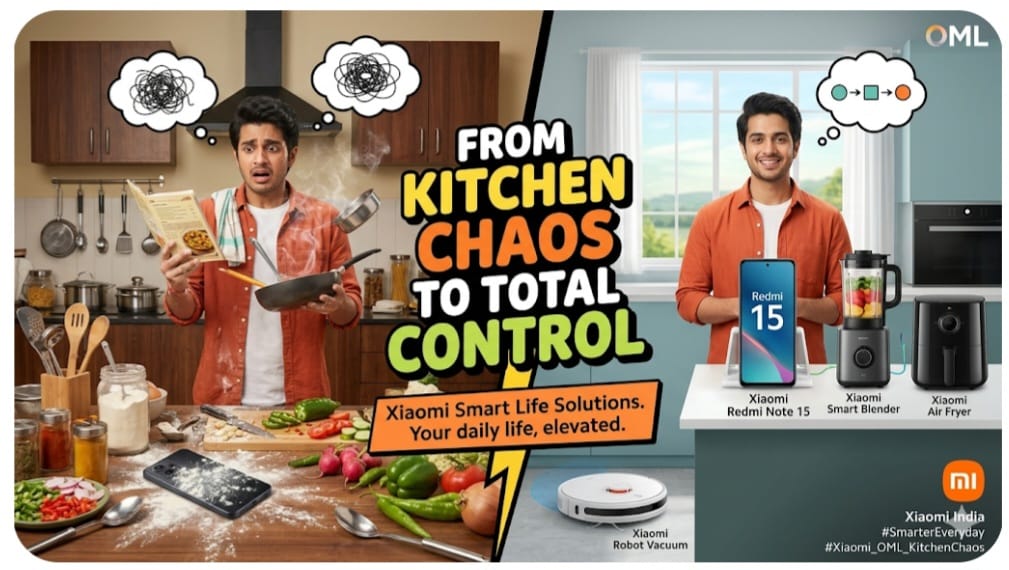
Xiaomi India has rolled out a new campaign built around the theme of “kitchen chaos,” developed in partnership with Only Much Louder (OML). The films capture high-pressure, cluttered home environments, using humour and relatability to demonstrate how Xiaomi’s devices integrate into everyday routines.
This matters because consumer tech advertising in India is moving away from spec sheets and feature lists towards lived experiences. The kitchen—one of the most active zones in Indian homes—becomes a proxy for this shift.
The strategy: embedding tech into culture
Rather than isolate product benefits, Xiaomi places its devices within moments of friction—noise, multitasking, and domestic urgency.
The “chaos” becomes a storytelling device to showcase utility without overt demonstration. This reflects a broader pivot in the category: from “what the product does” to “where the product fits.”
For a brand like Xiaomi, which operates across price tiers and categories, this helps unify its ecosystem under a single behavioural insight.
The use of OML also signals a content-first approach—leaning on entertainment formats and digital-native storytelling rather than traditional advertising structures.
What it signals for the industry
As device ecosystems expand, brands will need to communicate integration, not isolation. The home is emerging as a key battleground, with narratives anchored in everyday dysfunction rather than idealised living.
Agencies, in turn, are being pushed to create culture-led formats that can travel across platforms, not just campaigns built for television.
Our insight
In a crowded tech market, relatability is becoming a sharper differentiator than innovation—and Xiaomi is leaning into that shift.