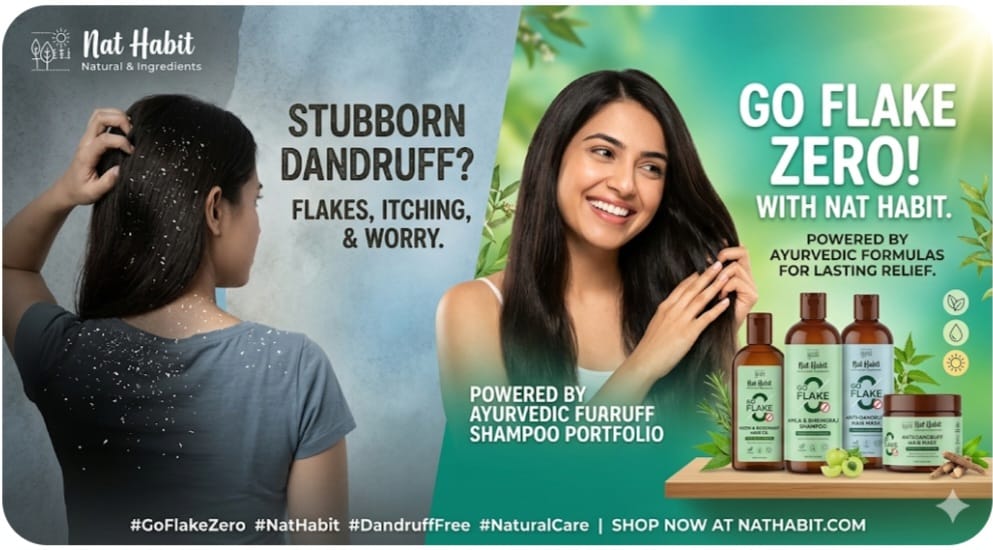
Nat Habit has introduced a new campaign, “GoFlakeZero”, centred around dandruff-control positioning as the brand sharpens its play in India’s highly competitive haircare category. The campaign focuses on visible scalp concerns and everyday grooming discomforts, framing anti-dandruff care as both a hygiene and confidence issue. The move is significant because India’s beauty and personal care market is seeing intensified competition from digitally native brands attempting to carve space within categories long dominated by legacy FMCG players. Haircare, in particular, has become a high-frequency battleground where product education and performance claims increasingly drive creative strategy.
From Ingredient Storytelling to Functional Outcomes
Over the past few years, many D2C beauty brands built differentiation through natural ingredients, Ayurvedic formulations and clean-label positioning. Nat Habit’s new campaign suggests a shift toward sharper functional messaging. Rather than selling only “natural” credentials, the brand is anchoring communication around a clearly defined consumer problem — dandruff visibility and scalp irritation. That reflects a broader industry pattern where beauty advertising is becoming more utility-driven amid rising customer acquisition costs and crowded digital shelves.
Why This Matters for Advertisers
For marketers and agencies, the campaign highlights how D2C brands are evolving beyond lifestyle branding into performance-led category competition. The anti-dandruff segment has historically been dominated by medically coded advertising and dermatologist-backed authority positioning. New-age brands are now attempting to disrupt that format using social-first creatives, relatable storytelling and simplified claims architecture. This also increases pressure on creative agencies to balance compliance-sensitive product communication with engaging digital storytelling.
Our insight
India’s D2C beauty market is entering a phase where emotional branding alone is insufficient. Functional credibility is becoming the next growth filter.