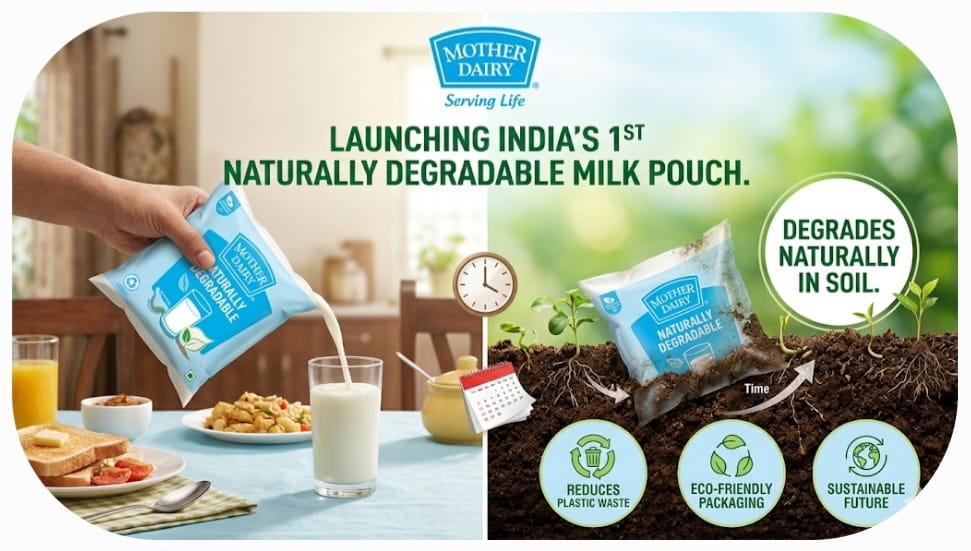
Mother Dairy has rolled out a campaign centred on its degradable milk pouches, bringing attention to a packaging initiative that aims to reduce the environmental impact of plastic waste. Rather than positioning sustainability as a corporate commitment buried in an ESG report, the brand is taking the message directly to consumers through one of its most frequently purchased products. The move is significant because milk remains a high-frequency household category, giving Mother Dairy an opportunity to communicate environmental responsibility at scale through everyday consumption habits.
The marketing shift: sustainability moves from promise to proof For marketers, the campaign reflects a broader evolution in sustainability communication. Consumers are increasingly sceptical of broad environmental claims and expect tangible, product-level evidence of change. By focusing on a visible packaging intervention, Mother Dairy is linking sustainability messaging to a measurable consumer touchpoint rather than abstract brand purpose. The pouch itself becomes both the product and the medium carrying the message. This approach aligns with a growing trend where operational decisions—packaging, sourcing, logistics and waste reduction—are becoming central to brand storytelling.
What it means for the industry As regulatory scrutiny around environmental claims increases, brands will need to demonstrate sustainability through concrete actions rather than awareness-led campaigns alone. Packaging innovation is likely to become a more prominent communication territory across FMCG categories. For agencies and media planners, this creates opportunities to build narratives around product transformation rather than standalone purpose campaigns. Our insight The next generation of sustainability marketing may be less about what brands say and more about what consumers can physically see, use and verify in their hands.