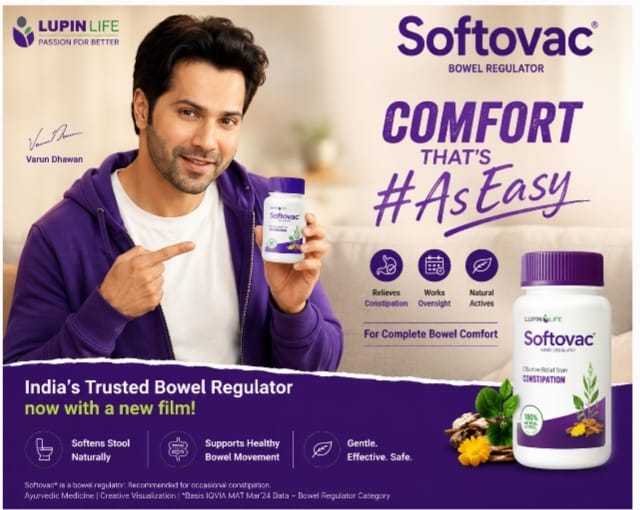
LupinLife’s latest Softovac campaign uses humour and celebrity familiarity to address a category traditionally communicated through functional or clinical messaging. Featuring Varun Dhawan, the film attempts to make digestive health conversations more mainstream by shifting the tone from medicinal seriousness to everyday relatability. The campaign matters because India’s OTC and wellness advertising landscape is undergoing a communication reset. Health brands are increasingly borrowing storytelling techniques from FMCG and entertainment categories to improve recall, reduce consumer hesitation and widen appeal among younger audiences.
Health Advertising Moves Closer to Mainstream FMCG Language For the advertising industry, the campaign reflects how wellness and digestive-care brands are adapting to attention-fragmented media environments. Functional claims alone are no longer enough to sustain engagement, particularly on digital platforms where humour, celebrity shorthand and short-form storytelling dominate consumption patterns. Varun Dhawan’s presence also signals a broader trend: health and wellness brands are now investing in mainstream celebrity-led visibility once largely reserved for packaged foods, telecom and personal care categories. The Strategic Read The objective is less about medical authority and more about cultural familiarity and repeat recall. Importantly, digestive wellness itself is becoming a larger commercial category as urban lifestyles, processed food consumption and preventive health awareness continue to rise.
The shift is expanding advertising opportunities across television, digital video, influencer-led education and pharmacy-commerce ecosystems. Indian healthcare advertising is becoming less clinical and more behaviour-driven. Our insight The next wave of wellness communication may depend less on explaining symptoms — and more on making uncomfortable conversations socially consumable at scale.