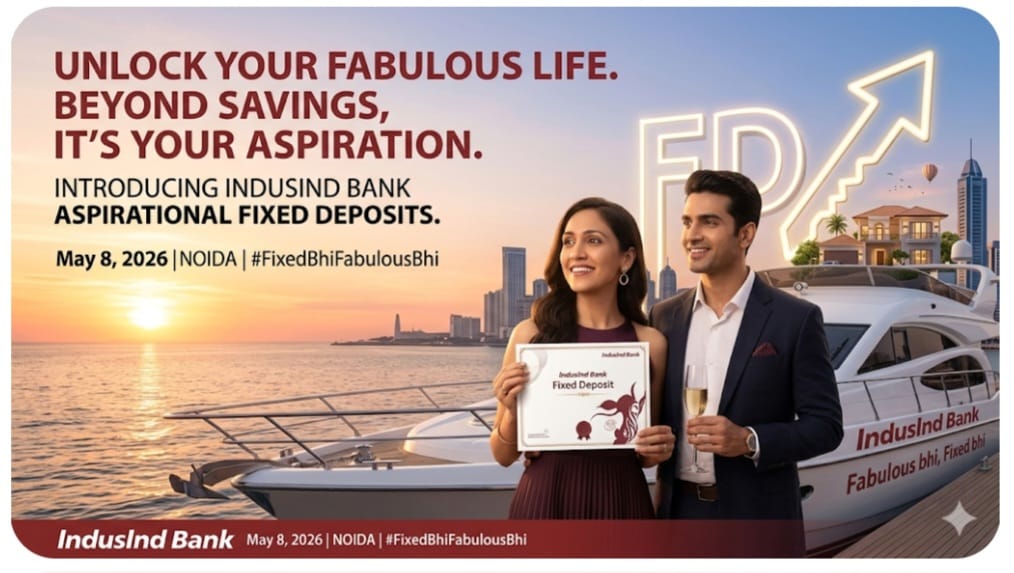
IndusInd Bank has launched a new campaign for its fixed deposit offerings under the tagline “Fixed bhi, Fabulous bhi”, signalling a clear attempt to modernise how traditional banking products are marketed to younger and affluent consumers.
The campaign moves away from the category’s conventional language of safety and stability, instead associating fixed deposits with lifestyle aspirations and smart financial confidence.
What the transition means
The shift is notable because fixed deposit advertising in India has historically relied on trust, returns and legacy credibility. IndusInd’s communication reflects how private banks are increasingly borrowing from consumer-brand playbooks to make financial products feel emotionally relevant and culturally contemporary.
Banking advertising adopts consumer-brand language
The campaign points to a broader trend in Indian financial services marketing: the repositioning of wealth products through lifestyle-led storytelling. As digital investment platforms, fintech apps and market-linked instruments compete for consumer attention, banks are under pressure to make low-risk savings products appear less transactional and more identity-driven.
“Fixed bhi, Fabulous bhi” simplifies that transition through colloquial, advertising-friendly language designed for social and digital amplification. The objective is not just awareness, but perception correction — particularly among younger consumers who often associate FDs with older demographics and passive investing behaviour.
What this signifies
The campaign also reflects how Indian banking brands are increasingly optimising communication for short-format media environments where relatability often outperforms technical explanation.
What marketers should note
Financial advertising is becoming less instructional and more behavioural. The industry is recognising that product adoption today depends as much on emotional framing as on interest rates or features.
Our insight
As fintech reshapes consumer expectations, traditional banking brands are increasingly selling financial confidence as a lifestyle signal rather than a purely rational choice.