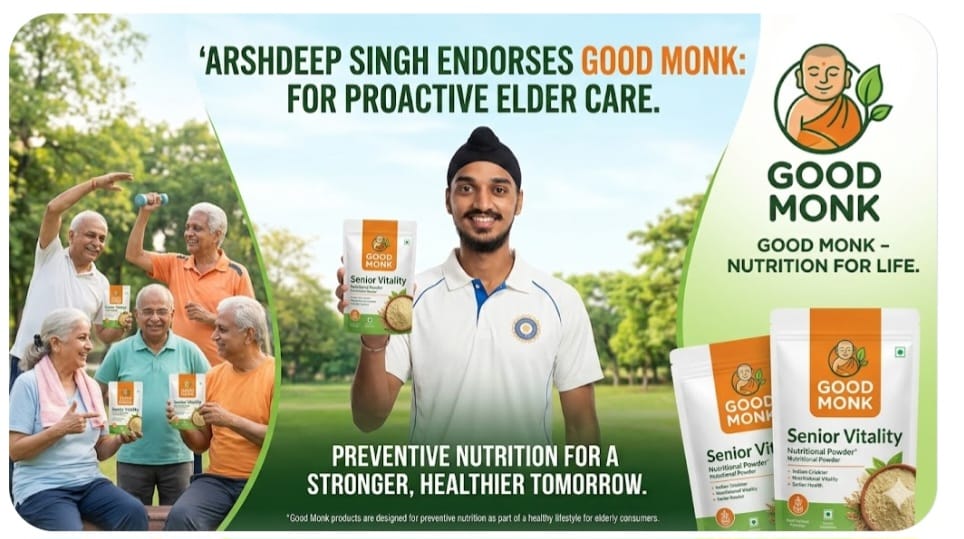
Good Monk has rolled out a campaign featuring Arshdeep Singh, focusing on preventive health for the elderly through daily nutrition. The messaging shifts attention from reactive treatment to proactive care—an area seeing increased relevance amid India’s ageing population and rising lifestyle-related health concerns.
For a category often driven by functional claims, this marks a move toward emotional and familial storytelling.
The strategic read
The interesting choice here is the use of a young cricketer to communicate elderly health—a deliberate contrast designed to bridge generational influence. It positions younger family members as decision-makers in elderly care purchases, expanding the brand’s addressable audience.
For the industry, this reflects a broader pivot in health and wellness marketing—from product efficacy to habit formation and preventive narratives. With India’s nutraceutical market projected to grow steadily, brands are moving early to own long-term consumption behaviour rather than episodic usage.
Media-wise, expect this to play out across digital video and targeted cohorts where family decision-making overlaps—urban, affluent, health-aware households.
What this signals for marketers
Health brands are reframing communication from “cure” to “continuity,” making daily consumption the core message.
Our insight
Preventive health is no longer a medical conversation—it’s becoming a marketing category.